
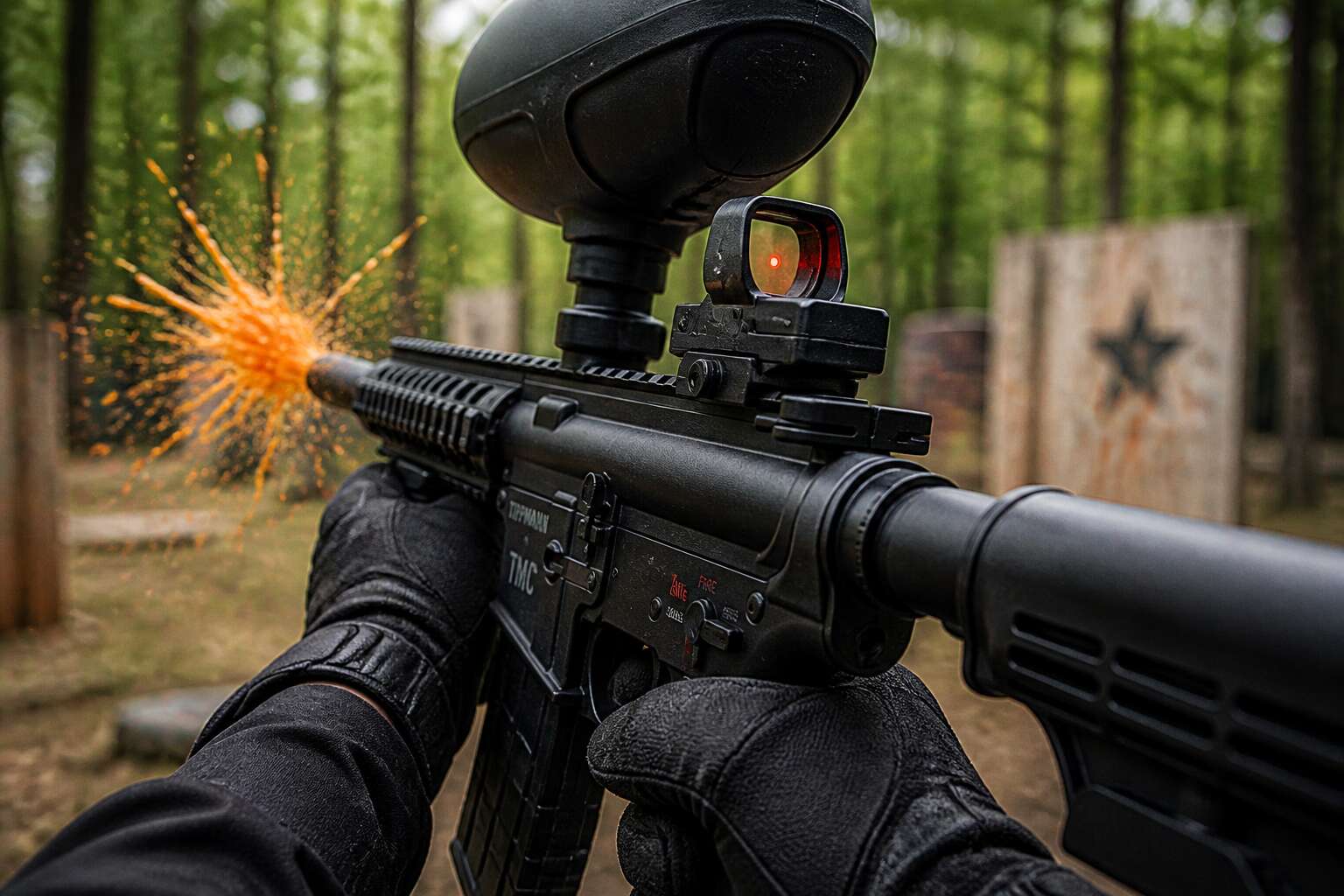
Understanding the Tactical Paintball Marker
What Sets It Apart From Traditional Markers
A tactical paintball marker differs from a standard paintball gun in ways that affect your stance. An ar paintball gun, for instance, carries a buffer tube that supports an adjustable stock. Traditional markers lack this component, which changes how your cheek sits and how you absorb recoil. I have found this one feature transforms shooting comfort.
The foregrip and rail system let you mount a red dot sight or a light. Traditional markers give you little space for such hardware. Internally, the ar paintball gun’s regulator and bolt sit protected inside a full receiver. That shielding matters on dusty South African fields!
A tactical marker’s trigger pack pulls with more precision, sometimes using an electronic sear. Your support hand stays forward on the foregrip, not under the air tank. You gain a stable aiming platform and quicker target acquisition.
The Rise of Mag-Fed Gameplay Styles
A paintball marker reveals its character the moment you shoulder it. Tactical models behave differently from speedball guns. They sit heavier, balance forward, and demand a steadier grip. The ar paintball gun fits this philosophy through its ergonomics and magazine-fed internals.
Mag-fed gameplay styles have risen because players crave realism and consequence. A hopper holds two hundred rounds. A magazine holds twenty. That difference forces you to approach each engagement with intention! I have watched players abandon their old habits entirely when they switch to mag-fed. They move slower, communicate more, and respect their ammunition.
The shift shows in the equipment itself. Mag-fed markers need:
– Durable magazine release mechanisms
– Reliable feeding under dust and moisture
– A balance point that works with a loaded mag
The ar paintball gun answers these demands with a familiar platform. It feels like something you already know how to handle.
Key Manufacturers and Iconic Platforms
Few market segments carry as much brand loyalty as tactical paintball. Tippmann established the benchmark with the 98 Custom, a marker that still anchors rental fleets worldwide, and the A-5’s response trigger taught a generation about mechanical feed rates. Tiberius and MCS followed with dedicated magazine options, shifting the aesthetic toward military training tools. That lineage explains why the ar paintball gun feels known the moment you shoulder it.
The current market splits into two priorities: mechanical ruggedness and electronic capability. Some players want a marker that never fails in the bush. Others demand programmable firing modes. The ar paintball gun intentionally rests in the first category, though several receivers accept electronic trigger frames as an upgrade path.
Defining an iconic platform usually comes down to three factors:
- Aftermarket support from third-party machinists
- Consistent cycling under dust and rain
- Receiver geometry that accepts accessories without rebalancing
Those criteria separate enduring designs from passing trends.
Form Factor and Realism: Look, Feel, and Handling
Slide your hand down the handguard of an ar paintball gun and the geometry tells you everything! Grip angle, forend width, and stock length all match the real steel platforms that inspired them. Manufacturers study actual firearm dimensions to replicate sight lines and trigger reach. The result is a marker that behaves predictably when you snap into cover or scan a treeline.
Weight distribution matters more than total mass. I’ve found that a muzzle-heavy marker drags on extended carries, while a rear-biased one feels twitchy. Balanced receivers track smoothly between targets.
The realism extends to the controls:
– Safety selectors that click with authority
– Magazine releases positioned where muscle memory expects them
– Bolt handles that reciprocate with each shot
These small details turn handling into an instinct.
Key Features to Evaluate Before Purchase
Barrel Systems and Accuracy Potential
Few components alter your relationship with an ar paintball gun more decisively than the barrel. The bore, the internal finish, and the absence of rifling determine your shot’s consistency. When evaluating barrel systems, length and dwell need equal attention. A longer barrel can stabilise flight, but it demands more air pressure to push the ball. Balance here is critical!
- Bore size: match it to your paint. A tighter bore reduces gas blowby.
- Porting: useful in wet conditions, yet it robs velocity.
- Material: carbon fibre or aluminium, each changes the swing weight.
Accuracy potential extends beyond the barrel. It comes from your hopper, your regulator pressure, and your stance. A consistent ar paintball gun delivers consistent shots.
Air Efficiency and Tank Configuration Choices
On average, an ar paintball gun cycles 18 shots per 10 MPa, but that figure shifts wildly with your tank and regulator choices. Even a perfectly honed barrel cannot compensate for a marker that bleeds air. Dwell settings, bolt weight, and regulator pressure all dictate the true cost of each trigger pull.
Tank configuration choices multiply that complexity. A 4500 psi carbon fibre bottle saves nearly 500 grams over steel, but your local field might only fill to 3000 psi. In South Africa, hydrotesting intervals and ambient temperatures affect pressure readings. Output pressure alignment with an ar paintball gun’s internal tolerances dictates shot consistency. A low-pressure regulator delivers stable shots, while a high-pressure kit risks velocity spikes.
Certain tank types suit distinct playstyles:
- Aluminium: budget friendly, but heavy
- Carbon fibre: lighter, holds more, yet costly
- 48ci profile: balances shot count and manoeuvrability
Magazine Styles: Straight, Curved, and Drum Options
Watch a player fumble a drum mag during a slide, and the importance of magazine style becomes clear. Straight magazines offer predictable insertion but can struggle with jams. Curved mags mimic real firearm ergonomics and improve feed reliability at steep angles. Drum magazines sacrifice manoeuvrability for sustained fire.
- Straight: affordable and simple
- Curved: moderate price, better reliability
- Drum: expensive, heavy, high capacity
Loaded weight shifts completely with your choice. A full drum moves the centre of gravity forward, tiring your support arm. Magazine costs vary wildly! Testing each style at your local South African field reveals compatibility issues, since many rental ar paintball gun platforms ship with incompatible mags.
Frame Materials and Overall Durability
Every ar paintball gun endures the rough stuff. South African bushes are unforgiving places for a marker. A polycarbonate frame shrugs off knocks, but aluminium offers a more rigid, enduring platform. I have seen cheap frames crack after a season of sliding on gravel! The weight distribution matters too. A heavier receiver soaks up vibration, but it will tire your arms during a long walk-and-shoot scenario. Some manufacturers now use glass-filled nylon composites. These balance strength and heft.
Before you commit to an ar paintball gun, check the seams and the rail system. A weak seam invites failure. An integrated rail should be machined, not glued. These details define the marker’s lifespan.
- Examine the buffer tube for stress marks.
- Inspect the trigger guard for flex.
- Look for reinforced pin holes.
A solid frame will serve you for years.
Rail Integration and Customization Capabilities
Most markers ship with Picatinny rails, yet few players use them properly. An ar paintball gun’s rail integration defines its adaptability. A continuous top rail lets you shift optics forward or back without losing zero.
Look for M-LOK or KeyMod slots on the handguard. These allow grips, lights, or remote line brackets to attach with a quarter turn. Proprietary dovetails limit you to one ecosystem. That is a trap.
- The rail must sit true to the receiver axis.
- Mounting screws should use standard hex sizes.
- Accessories must not block the magazine release.
A modular ar paintball gun adapts to speedball or bush play only if the rail is machined to tight tolerances. Loose rails shift under recoil. Cheap rails strip easily.
Trigger Sensitivity and Firing Modes
Trigger sensitivity is the measure of how directly your intent becomes velocity. On an ar paintball gun, a clean trigger break with a short reset preserves your sight picture during follow up shots. A gritty or heavy pull will pull your barrel off target. You will see it in the paint spread.
Firing modes decide how the marker responds to that pull. Semi automatic rewards patience and precision. Programmable ramping, common on tournament grade electronics, matches your finger cadence with a capped burst. For mag fed scenarios, many players prefer semi auto to conserve paint. Speedball favors ramping for controlled lane dominance.
- Confirm the trigger guard accommodates gloved fingers.
- Check whether the board settings are adjustable without a laptop.
- Test the mechanical trigger override, your safety net when the battery dies.
Adjusting these features transforms the ar paintball gun into an extension of your reflexes. That is the quiet advantage you build before the game starts.
Performance Comparison: Mag-Fed Versus Hopper-Fed
Weight Distribution and Player Mobility
When you shoulder an ar paintball gun in its mag-fed form, the weight sits closer to your centerline. A forward magazine shifts balance toward your support hand. Hopper-fed markers place the paint load high and rearward, tilting the muzzle up. That difference emerges in a snake bunker slide.
I have watched players change their stance after switching from a hopper to a mag. The body compensates for the high center of gravity, slowing target acquisition. With a mag, the marker feels like a rifle.
- A lower profile reduces the chance of the hopper catching on bunker foam.
- Magazine changes force a deliberate reload, unlike a hopper’s continuous feed.
- Forward weight distribution allows faster snap shooting from a crouch.
Over a day, the lighter feel of a mag-fed ar paintball gun reduces fatigue, while hopper-fed markers demand more core strength. Neither is better, but the choice dictates how your body moves!
Rate of Fire and Reload Efficiency
A hopper-fed marker can rip through paint at 15 balls per second. A mag-fed ar paintball gun tops out near 8. That gap seems decisive in a supair bunker, but it narrows when you count real trigger pulls per game. Most players fire in bursts anyway!
Reload efficiency tells a different story. Hoppers hold 200 rounds. Magazines hold 20. You will swap mags every few minutes. A mag change is deliberate: slide out, slide in, bolt release. A hopper refill means unscrewing a lid, pouring paint, and praying nothing spills. I have seen players fumble both under fire.
Here is the honest comparison:
1. Hopper-fed wins sustained firefights.
2. Mag-fed wins tactical pauses.
3. An ar paintball gun forces planning. A hopper forces none.
That planning changes your approach. Twelve rounds per mag means every shot carries weight. You learn to make each one count.
Gameplay Immersion and Tournament Legality
Immersion is a matter of consequence. When every trigger pull carries real weight, the game changes. A mag-fed ar paintball gun makes each shot a considered decision. Hopper-fed players enjoy noisy abundance; mag-fed players enjoy quiet tension. Most South African fields welcome both, but tournament legality is a separate matter.
The rules split along predictable lines:
1. Speedball leagues mandate hopper-fed markers.
2. Scenario events embrace mag-fed platforms.
3. Open divisions allow either, depending on the organiser.
That split means your purchase depends on your weekend plans. Competitive players need a hopper-fed marker for league play. Story-driven players choose mag-fed for immersion. The ar paintball gun rewards planning, while the hopper rewards reflex. Choose according to the game you actually play.
Cleaning Requirements and Mechanical Complexity
Owning an ar paintball gun changes your relationship with maintenance, especially when you compare platforms side by side. Mag-fed markers demand more from you in the field and after it. Their internal bolt systems operate under higher tension to strip paint from a magazine, which means dirt and grease accumulate in places hopper-fed players rarely see. I find that a two hour scenario session leaves my ar paintball gun begging for a strip down, while a hopper-fed speedball marker can survive a weekend with just a barrel swab and a few drops of oil. The cleaning frequency is not negotiable if you want consistent feeding.
Mechanical complexity follows the same curve. Hopper-fed markers often use a simple blowback or spool valve design, with fewer moving parts and less to fail. Mag-fed platforms introduce a catch, a spring, and a follower that must align perfectly every single shot. That extra engineering gives you realism, but it also gives you parts that can bind under dust and paint. Consider the difference in your routine:
– Hopper-fed: wipe the bolt, lube the o rings, done.
– Mag-fed: disassemble the receiver, clean the mag well, inspect the feed lips, check the bolt spring.
That list is honest about the trade. The payoff is a marker that feels deliberate, but it asks for your attention in return. My ar paintball gun has taught me patience, because a neglected magazine system will jam at the worst possible moment. Plan for an extra hour at the workbench after every outing, and you will keep the performance sharp. South African humidity and dust make this more than a suggestion, it is a survival requirement for the hardware.
Long-Term Cost: Paint Usage and Component Wear
Three thousand rounds per day is normal for a hopper-fed player. A mag-fed enthusiast might fire five hundred. Over a year, that gap becomes a chasm in your paint budget. The ar paintball gun, with its deliberate reload cadence, forces you to aim instead of spray.
Component wear mirrors the paint bill. Hopper-fed markers cycle rapidly, grinding down o rings and springs. Mag-fed platforms operate under higher bolt tension, but their lower shot count means fewer total cycles. You replace paint more often or parts more often, and the ledger always balances.
- Paint usage drops by 60% in scenario play
- Bolt and seal lifespan doubles for mag-fed users
Essential Gear and Upgrades for Tactical Scenarios
Choosing Between CO2 and Compressed Air Power
The eternal debate between CO2 and compressed air remains a matter of temperament as much as technology. CO2 offers convenience and low entry cost, but its performance suffers in cooler conditions. Compressed air delivers consistency, which matters when every shot counts. For an ar paintball gun, the latter often proves the wiser investment.
Essential gear upgrades such as a quality remote line and a padded tank cover will serve you better than any cosmetic addition. A good hopper is non-negotiable. Consider these practical purchases:
- A reliable electronic hopper
- A barrel squeegee and maintenance kit
- Spare o-rings and detents
- A pod pack with comfortable harness
South African players face unique conditions, from dusty fields to sharp temperature swings. Choose your power source accordingly. The ar paintball gun performs admirably either way, but informed choices separate the discerning player from the casual enthusiast.
Optics, Red Dots, and Scope Selection
Most markers roll off the line with rudimentary sights, yet the ar paintball gun deserves better. In tactical scenarios, your eyes are the true weapon. A red dot sight lets you acquire targets swiftly without aligning traditional sights. For longer engagements, a low magnification scope exceeds the effective range of most paintballs.
Consider these practical optics options:
- A 1x red dot for fast target acquisition in close quarters
- A 3x magnifier behind your red dot for mid range clarity
- A variable power scope, like a 1-4x, for flexible field use
Mounting is straightforward with the top rail. Select rings that suit your eye relief. Keep lens covers accessible to combat dust from dry South African fields. The ar paintball gun rewards deliberate setup, so test your zero under different light conditions.
Tactical Vests, Pouches, and Magazine Carriers
Tactical vests for an ar paintball gun solve a problem that standard loadouts ignore. South African fields punish equipment that shifts or snags.
Pouches should hold three or four magazines within easy reach. A dedicated dump pouch prevents wasted motion during reloads. Consider a vest with adjustable straps to accommodate chest protectors.
- Hydration carrier for long matches
- Swivel clips for a remote line
- Padding at the shoulders to reduce impact sting
Magazine carriers built for real steel are fine, but retention matters. You want a firm hold that does not require a struggle to draw the magazine. Smooth transitions between reloads and target acquisition are what win engagements.
Upgrading the Bolt, Sear, and Internal Pneumatics
The bolt is the core of an ar paintball gun. Upgrading it alongside the sear and internal pneumatics changes how the marker cycles. A lightweight bolt reduces reciprocating mass, which cuts vibration and improves cycle speed. A polished sear with a crisp engagement surface removes gritty drag that ruins precision.
Internal pneumatics deserve equal attention. High-flow valves and upgraded airlines let the marker recycle faster without spiking pressure. This matters in South African bushveld where dust and heat stress every moving part. Consider these components:
- A delrin bolt for reduced friction
- A hardened steel sear for longevity
- A high-flow valve for consistent shots
These upgrades do not mask poor maintenance. They reward a clean, well-lubricated platform.
Sound Amplifiers and Barrel Shrouds for Style
Sound amplifiers and barrel shrouds are the jewelry of an ar paintball gun. They do not improve ballistics, but they alter presence. An amplifier adds a percussive report that echoes through the koppies, while a shroud keeps the barrel clean from thorn bush interference. In tactical scenarios, these components shape how opponents perceive your position.
Shrouds also offer a practical surface for mounting small accessories. Many players pair them with a folded bipod or a pressure pad. Amplifiers, however, require a threaded barrel tip to fit securely. Choose one with a steel core to withstand repeated impacts.
Consider these options when customising your marker:
– A polymer shroud for lightweight handling
– An aluminium amplifier with a matte finish
– A combined shroud and sound dampener unit
These additions do not alter the firing mechanism. They simply let your ar paintball gun carry a distinct character during skirmishes, which is reason enough for many South African players.
Shopping Guide and Ownership Considerations
Entry-Level Pricing Versus Professional Build Costs
The price gap between a starter AR paintball gun and a professional build often exceeds the marker’s original cost. Entry-level models sell for under R4,000, yet factory internals can fail within a season of regular play.
Professional builds cross R20,000. Machined receivers, matched bolts, and tuned pneumatics deliver consistent velocity. The extra money buys precision. That precision reduces paint waste and downtime.
Ownership considerations extend beyond purchase price. You need to budget for ongoing expenses:
- Spare parts and servicing fees
- Magazine and tank compatibility
- Upgrades that the platform requires
For most players, a mid-tier platform strikes a better balance between cost and reliability. Professional gear only pays off if you compete weekly.
Starter Bundles Versus Fully Custom Builds
Your first ar paintball gun purchase determines your maintenance routine. Starter bundles package everything, yet the mask and squeegee usually survive longer than the tank. I have watched players abandon decent markers because the included equipment failed first.
Fully custom builds require you to own each decision. You pick the body, the bolt, the feed system. Warranty coverage and local parts support decide whether your marker survives its first season.
- Verify the bundle’s air tank certification date
- Check whether the magazine design matches your play style
- Ask about servicing options in your province
South African conditions, from coastal humidity to inland dust, expose poor component choices. A starter bundle gets you on the field this weekend. A custom build keeps you there for years.
Common Pitfalls First-Time Buyers Face
New players often choose an ar paintball gun based on how it looks in photos, not how it performs in their hands. That mistake surfaces quickly when the marker jams mid-game or the trigger feels sluggish. Another frequent error is buying extra magazines before verifying the marker’s actual feed system. South African humidity can also expose internal corrosion if you neglect basic care.
First-time buyers frequently overlook the cost of accessories.
- Spare o-rings and maintenance tools
- Proper storage bags
- Local repair parts availability
These items matter more than a flashy exterior. A marker that cannot be serviced locally becomes a paperweight.
The real test happens on the field. Rent or borrow first. Play two sessions before committing to your first ar paintball gun. That one step saves you from owning a mistake.
Used Market Tips and What to Inspect
The used marker market in South Africa can be a goldmine, but only if you know what to inspect before handing over cash. An ar paintball gun that has seen heavy tournament play may have a worn sear or a leaking regulator, both of which are cheap to fix if parts exist locally.
Start your shopping guide by asking the owner for the marker’s maintenance log. A neglected bolt face or a scratched inner barrel tells a story. Then, during the test session, run at least one full magazine through it. Watch the velocity consistency and listen for the telltale hiss of a failing valve.
For ownership considerations, remember that secondhand markers often need immediate servicing. Set aside money for fresh o-rings and a new detent. When you inspect, check these points:
- Striker tip wear
- Battery contacts in the grip
- Air line threading
- Trigger linkage play
A thorough inspection prevents a paperweight purchase. The ar paintball gun you choose should feel reliable, not just look the part.
Local Field Regulations and Safety Compliance
Your local field writes the rules that matter. In South Africa, an ar paintball gun can pass a store counter check yet fail the chrono station at your first game. Provincial regulations differ, so ask about kinetic energy limits and firing modes before you hand over cash.
Ownership considerations extend beyond the marker itself. You need a dry safe, a barrel sock, and a tank within hydrotest date. Local safety compliance means a chrono test before every session, no exceptions.
- Match the serial number to your proof of purchase
- Confirm your compressed air tank certification
- Test muzzle velocity at the field chrono
That routine keeps you legal and respect worthy. The ar paintball gun is part of a regulated environment, so treat it with that weight.
Storage, Lubrication, and Seasonal Maintenance
Walk into a South African paintball store and the ar paintball gun you want will likely sit behind a glass counter. Ask the dealer to pull it out and run your hand along the receiver. Feel the bolt action. Check the magazine release spring for stiffness. Retailers will let you dry-fire with permission, and that one pull tells you more than any online review. I always tell buyers to match the serial number to the proof of purchase before leaving the counter.
Ownership continues after the shooting day ends. Store the ar paintball gun in a dry cabinet with the barrel sock in place. Apply a thin coat of silicone lubricant to the bolt rails every few months. In Johannesburg winters, low humidity dries out O-rings faster than you expect; in Durban summers, coastal humidity invites rust. Adjust your care cycle to your province.
A simple routine looks like this:
- Degas the air tank after each session
- Remove the magazine before storage
- Check O-rings for cracks every quarter
This rhythm protects your marker all year round.


0 Comments