
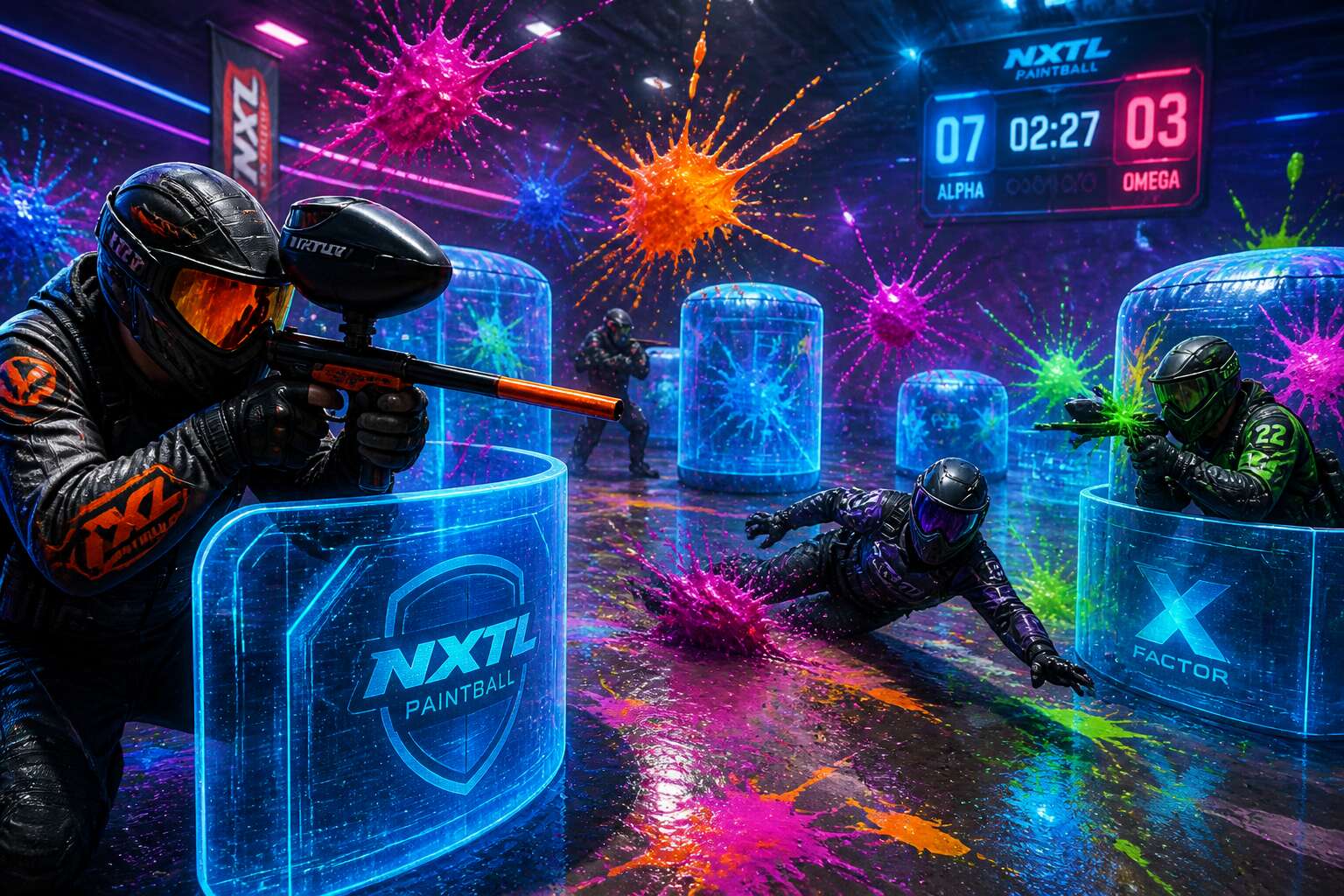
The Evolution of Paintball 3D Gaming
From Pixels to Polygons: The Early Days of 3D Paintball
In 1997, nobody complained about pop in because everything was pop in. Those early paintball 3d games rendered entire fields as jagged polygons, and players loved it anyway. We accepted clipping errors and blocky silhouettes because the alternative was sprites that never turned around!
Early software stored geometry in tiny chunks. Collision detection was often just a bounding box around your avatar. Games used simple tricks to fake depth and speed. A common recipe included:
- Precomputed line of sight
- Blocky hitboxes for the whole body
- Distance fog to hide low draw distances
These workarounds made the genre playable on hardware that struggled with a single texture. The evolution from those crude beginnings taught valuable lessons. Solid foundations mattered more than pretty graphics.
Rise of Online Multiplayer and Team-Based Combat
When the first online servers opened for paintball 3d, the game gained a psychological dimension that offline modes never offered. Real people were thinking behind those avatars. The solitary practice of memorising maps gave way to coordinated pushes and defensive holds. Team-based combat introduced a social layer that single-player modes never touched. Communication became the deciding factor. Squads that called out enemy positions reliably beat players with faster reflexes.
- Voice coordination replaced text chat.
- Distinct roles emerged within squads.
- Trust became a strategic resource.
The psychological weight of accountability changed decision making in paintball 3d. I felt it every time I pushed forward, knowing a teammate’s fate depended on my call. Players hesitated before rushing, because their choices now affected four other humans. That hesitation, that shared risk, matched what real paintball players felt on physical fields. The game became a study in human reliability under pressure.
Modern Graphics Engines and Realistic Ballistics
Modern graphics engines have transformed paintball 3d into a study of physics and light. The arenas now render dynamic shadows, particle effects, and surfaces that react to every impact.
- Projectile arcs respond to wind drag and velocity decay.
- Barrel length and paint fill influence accuracy and splatter.
- Environmental factors like temperature and humidity alter flight paths.
I notice the difference in every match. Each round behaves as a physical object. That fidelity changes how players approach positioning and shot timing.
Mobile 3D Paintball: Bringing the Arena to Your Pocket
The arena no longer demands a desktop rig and a wired connection. Mobile 3D paintball has condensed the full tactical experience into a device that slips into your pocket. The shift feels abrupt. One day you were tethered to a chair; the next, you are diving behind cover during a lunch break. The engineering behind this compression is remarkable. Developers have stripped away non-essential processing to prioritize the core physics and rendering. The result is a game that breathes despite its constraints.
Playing on a touchscreen changes the interaction loop. You eye the trajectory line, adjust for wind resistance with a swipe, and fire. There is no mouse to twitch, only your thumb’s precision. This introduces a particular latency and a specific skill curve. You must anticipate your opponent’s movement earlier. The visual fidelity on modern phones is startling. Particle effects for paint breaks and dynamic shadows remain intact, ensuring that the strategic depth of paintball 3d is preserved.
Connectivity remains the true test. A smooth experience depends entirely on your network’s stability and the server’s regional location. South African players often face high ping on overseas servers, which forces a more predictive playstyle.
- Shooting ahead of moving targets becomes crucial to compensate for latency.
- Opting for support roles like flag runner reduces the need for split-second reaction shots.
- Using shotguns over long-range markers minimizes the impact of packet loss.
This portability expands the player base. You no longer need a dedicated gaming room. The convenience encourages spontaneous matches. The ability to jump into a ranked arena while commuting has altered the demographic. It is no longer just a hobby for enthusiasts with high-end PCs. It is a casual, accessible entry point for anyone curious about the sport. The gameplay remains deep, but the barrier to entry has crumbled, placing the entire battlefield in the palm of your hand.
Competitive Esports and the Professional Paintball Scene
Professional paintball 3d leagues now command prize pools that rival traditional sports. The shift from hobbyist pastime to legitimate esport has been quiet but decisive. Players train with the same dedication as athletes, studying frame-by-frame replays and refining movement patterns until muscle memory takes over.
The spectator experience has transformed as well. Broadcasters use drone cameras and player perspective feeds to capture the tactical chaos. Viewers witness strategies unfold in real time, forcing teams to adapt mid-match rather than rely on rehearsed plays.
- Teams employ dedicated coaches and data analysts to study opponent tendencies
- Sponsors fund international travel and specialized equipment
- Regional tournaments feed directly into global championship brackets
South African players have entered this ecosystem with measurable success. Years of competing on high-ping overseas servers produced a distinctive aggressive style that unsettles European and Asian opponents. The professional paintball 3d circuit rewards adaptability, and that remains the defining trait of the scene.
Essential Gear and Equipment for 3D Paintball
Choosing the Right Marker for Your Play Style
Your marker is the single most personal piece of equipment in paintball 3d, yet most players choose it based on looks rather than role. That mistake costs games. A heavy sniper platform hampers a flanker, while a featherweight electro marker leaves a support player outgunned in sustained exchanges.
The gear list below rarely appears in beginner guides, but it separates consistent performers from one-match wonders:
- Thermal mask with anti-fog lenses
- Remote line to reduce marker profile
- Squeegee and barrel cover
- Cleats with ankle support
When I first started, I ran a stock marker and blamed the game for every elimination. Upgrading to a marker that matched my aggressive front play style improved my performance. Range, trigger response, air efficiency, each spec matters only in relation to your role. Choose based on how you actually move, not marketplace hype.
Masks, Goggles, and Protective Gear: Safety First
Your face is the only part of you that cannot respawn in paintball 3d, yet some players treat masks as an afterthought. A direct hit at 280 feet per second leaves more than a bruise. Thermal anti-fog lenses and a chin strap are non-negotiable.
- Full-seal mask with dual-pane thermal lens
- Neck protector or padded collar
- Gloves with reinforced knuckles
Cheap goggles fog up mid-game, blinding you exactly when the enemy flank advances. We see it every weekend on South African fields. Spend on the interface between you and the paint, not on another barrel.
Paintballs, Air Tanks, and Loaders Explained
The paintball is a fragile instrument. Under the South African sun, these gelatin spheres swell and soften, changing how they travel. A .68 caliber round leaves the barrel at 280 feet per second, but temperature and humidity rewrite its trajectory. Inspect your paint before every match.
Air tanks provide the propulsion for your paintball 3d marker. A carbon fiber tank holding 4500 psi permits roughly 1500 shots. A nitrogen fill remains consistent at highveld altitude. Loaders, also called hoppers, feed the marker without jamming. Agitated loaders suffice for weekend play. Force-fed systems provide certainty for competitive schedules.
- 500 count paintballs stored in shade
- A loader with anti-jam fins
- A spare O-ring kit for your regulator
Trust these components, or they will fail you in the dirt.
Upgrades and Customization: Enhancing Performance
Many players treat paintball 3d as a pure shooter, but the upgrade system rewards those who study the numbers. A faster feed rate on your virtual loader or an adjusted sensitivity curve on your marker can shave milliseconds off your reaction time, and I’ve seen that difference decide close matches.
Before you spend your in-game currency on a single part, weigh the options:
1. Barrel accuracy modifiers for long-range maps
2. Stock stabilisers that reduce recoil patterns
3. Custom grips that improve handling stats
None of this matters if your connection lags, but for grinding ranked ladders, proper loadouts matter more than raw aim. The virtual environment lets you test hundreds of combinations without buying a physical part, a luxury South African players rarely get on real fields.
Budget vs. Premium Gear: What’s Worth the Investment
A decent virtual marker costs less than a box of real paintballs in Gauteng. That is why the simulated arena has become the practical choice for budget conscious players. But premium gear tempts everyone.
I have used both! A cheap digital loader works fine until a firefight gets chaotic. Premium equipment offers smoother feedback and better latency handling, though the price difference does not always translate to wins.
- Trigger response
- Receiver weight
- Sound damping
In paintball 3d, South African players can test these upgrades without import duties. Budget gear remains viable, but know where your weakness sits.
Mastering 3D Paintball Strategies and Tactics
Offensive Maneuvers and Aggressive Breaks
Aggressive breaks in paintball 3d are not about sprinting blindly. The players who excel read the opening angles before the buzzer sounds. They choose a lane based on cover positions, then execute with a burst of motion that forces the opposing team to scramble.
Offensive maneuvers work best when they create crossfire. One player suppresses a bunker while another advances. In South African fields, dust and glare can obscure those sightlines, so you learn to trust your peripheral vision. The first five seconds often decide the entire point. You either control the field’s pacing or spend the rest of the match chasing it.
Defensive Positioning and Holding the Fort
Defense in paintball 3d demands patience, not passivity. The bunker you choose becomes your anchor, but only if you read its sightlines before the first shot rings out. I have seen players hold a position simply by shifting their weight every few seconds, making themselves a harder target behind the foam.
Holding the fort means controlling angles, not camping. The strongest defensive players in paintball 3d follow a simple rhythm:
- Check the primary lane, then the secondary lane.
- Call out movement before you shoot.
- Move only when the bunker you are leaving is covered.
In South African fields, the sun can blind the attacker first, so use that glare. Let the aggressors overextend, then punish their commitment. Keep your marker up and your mask sealed, because the match is won in those quiet moments of waiting.
Communication and Teamwork on the Field
On any paintball 3d field, the team that talks last usually wins. Communication is not about volume; it is about precision. A single phrase such as “two snakes, right side” carries more weight than a panicked barrage of words.
In South African competitions, the best squads build their strategy around a shared vocabulary:
- Call out your position when you move
- Report enemy paint trails, not just bodies
- Confirm a kill before rotating
Teamwork in paintball 3d rests on trust. You hold a lane because your teammate covers your flank. You rush a bunker because someone else suppresses the opposing marker. The rhythm of the match emerges from these small exchanges, repeated until they become reflex.
Reading the Field: Map Awareness and Adaptation
In competitive paintball 3d, the map changes the moment the first shot is fired. The layout you scouted during the walkthrough loses its shape once paint fills the air. Enemy movement, wind drift, and broken bunkers redraw every lane. What worked in the first minute rarely works in the last.
Map awareness in paintball 3d means reading the field as a shifting system. I track the same set of variables every match:
- which bunkers still offer full cover
- where opponents have established lanes
- which angles expose a runner moving up the tape
Adaptation follows directly from that reading. The teams that win in South African tournaments are the ones that abandon a broken strategy without hesitation. They see the snake collapse and immediately flood the opposite side. They sense a shift in momentum and tighten their hold. That flexibility, more than marker speed, decides the outcome.
Building Your Own 3D Paintball Field at Home
Selecting the Perfect Location and Terrain
Most home fields fail because the terrain is an afterthought. An empty plot in Gauteng or a stretch of Karoo scrub can become a paintball 3d arena when you read the land carefully. I always look for ground that undulates, since gentle slopes create sightlines that punish the careless. Drainage matters too; a field that turns to mud after an afternoon thunderstorm becomes unplayable.
For cover, nature often offers more than any manufactured bunker. Dense thickets, fallen logs, and rocky outcrops provide authentic shelter. When scouting, I prefer locations with a mix of open zones and tight corridors.
- Test the soil for firm footing, especially after rain.
- Check for natural boundaries that keep stray paintballs contained.
- Confirm the direction of prevailing winds, as they alter shot trajectory.
The perfect terrain respects both safety and challenge, keeping every player engaged.
Designing Bunkers and Obstacles for Maximum Cover
Designing bunkers starts with angles. I measure sightlines from every potential firing position before I build. A bunker that hides you from the left but exposes your ankles to the right is a liability. Wooden pallets stacked with sandbags create sturdy cover, yet they also block your own team’s view. Leave gaps at ground level for crawling shots.
PVC pipe frames with canvas tarps are lightweight and portable. They move easily when you test new layouts in your paintball 3d arena. Avoid metal sheets; they ricochet pellets unpredictably. Instead, use rubber conveyor belting from mining supply stores. It absorbs impacts and survives Highveld summers.
Consider how bunkers interact with the surrounding ground:
- Low cover suits rocky, uneven terrain.
- Tall bunkers work on open flats where you need vertical shielding.
Place obstacles so no single position controls the entire field. A balanced paintball 3d layout keeps players moving rather than hunkering down.
DIY Air Systems and Field Maintenance Tips
Setting up a home paintball 3d field turns your backyard into a practice ground. The first investment is a quiet air compressor. Scuba tanks fill pods, but a dedicated high pressure system saves hours. I run a small nitrogen generator from a welding supplier. It costs less than refill trips.
- Check bunker seams weekly.
- Sweep gravel from firing lanes.
- Lubricate regulators with silicone oil.
- Rotate pallets to avoid rot.
Your field changes with the seasons. After Highveld thunderstorms, inspect tarps for pooling water. Replace frayed straps before they snap mid-rush. A maintained arena keeps the game honest, and every Sunday the turf welcomes you back.
The Future of Paintball 3D: Tech Trends to Watch
Virtual Reality and Immersive Paintball Experiences
The next leap for paintball 3d happens inside your headset. Virtual reality now delivers full-body immersion, and players duck, sprint, and aim without a controller.
Haptic vests and motion platforms simulate the sting of a paintball. The real barrier is latency; even 20 milliseconds breaks the spell.
- Eye-tracking for snap shooting
- Full-body skeletal tracking
- Physical bunkers mapped into VR
South African test arenas already run these systems. Costs fall each year, so home setups could rival commercial fields soon!
Augmented Reality in Training and Gameplay
Some analysts project the AR market to surpass $100 billion before the end of the decade. For paintball, that money buys a layer of data on your goggles, and it transforms practice with paintball 3d into something closer to flight simulation.
Augmented reality does not replace the field. It enhances it. You still get sprayed with paint. You still haul your own pods. But overlays now place ghost opponents behind real bunkers, show marker calibration, and trace the flight path of the last shot. The technology turns a bare training ground into a tactical sandbox.
Here is what early AR training modules already deliver:
– Silent communication cues that appear on a teammate’s visor
– Heat maps of recent enemy fire across the arena floor
– Timed decision drills that project a moving target grid
– Replay overlays for post-match movement analysis
South African fields, especially test arenas in Gauteng and Cape Town, are natural proving grounds because their signal coverage forces developers to pack the processing on-board. The next generation of paintball 3d will not be a screen you hold. It will be a lens you trust during the most chaotic seconds of a breakout.
Smart Gear and Wearable Technology
The quiet revolution in paintball 3d is happening inside the gear itself, where sensors and fabric converge into something that feels less like equipment and more like a second skin. Wearable technology has moved beyond heart rate monitors. Newer jerseys embed impact sensors that log every hit with a timestamp and a pressure reading, so a referee can settle a disputed elimination without pausing the game. It is a strange pleasure to watch the numbers shift after a match, to see exactly where the paint found you and how hard.
Consider what the newest smart gear already carries on its back:
– Haptic shoulder pads that vibrate to signal a flanking move
– Air tanks with integrated pressure telemetry streamed to a wrist display
– Loaders that self-calibrate their feed rate based on the marker’s recoil pattern
– Cleats with embedded gyroscopes that track your footwork for later analysis
These components are being tested on South African fields, where the heat and dust punish fragile electronics. The smart mask is the next frontier, with a micro display that shows your shot count, air pressure, and the direction of the last three enemy shots. It is a functional tool, not a gimmick. The data exists to make your next move faster and your angles tighter. For players who train seriously, this wearable layer transforms practice into a measurable discipline.
3D Printing and Custom Equipment Manufacturing
Industrial 3D printing has finally reached the players. We can now print custom grips, air tank covers, and even prototype hopper shells in our garage. This shifts the paintball 3d landscape from mass production to bespoke tinkering. A broken feed neck no longer ends your weekend; it becomes a Sunday CAD project!
Useful early adopters are already testing:
- Vented barrel shrouds that reduce sound signature in dense bush.
- Custom trigger shoes with adjustable reach for gloved hands.
- Replacement battery housings that withstand Highveld humidity.
Material science still limits the wild ideas. PLA warps under African sun, while resin prints can crack on impact. Yet newer composites, like carbon fiber reinforced nylon, hold up well. For South African players, this means durable, hyper-local upgrades that cost less than imported parts. The future of paintball 3d is not one perfect marker, but a stable of prototypes tailored to your exact field conditions.

0 Comments