
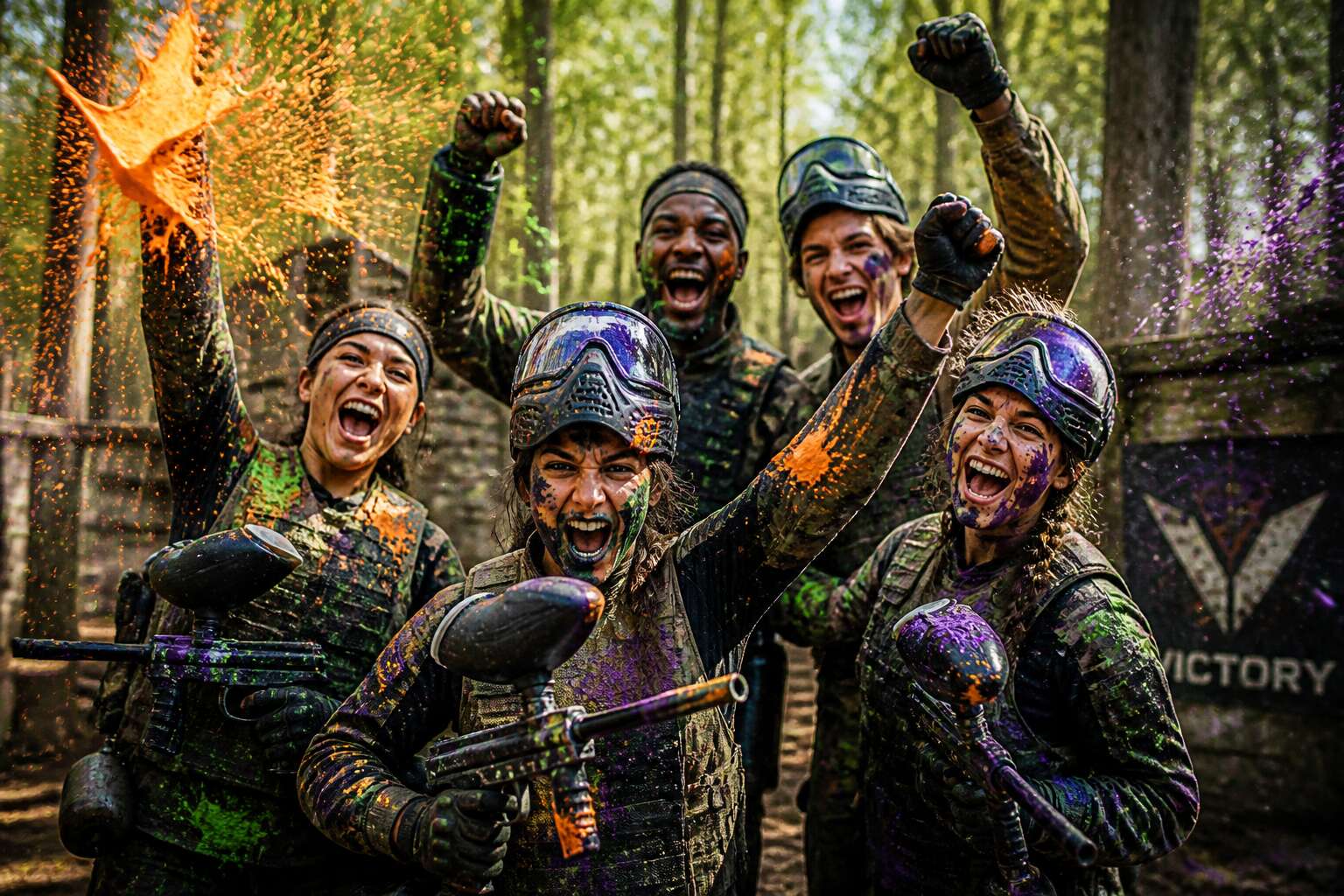
The Meaning Behind the Phrase
How Language Evolves in Sports Culture
The phrase “paintball is gay” once worked as a schoolyard dismissal, a direct way to mark the sport as inferior. Words do not stay still. In South African sports culture, language bends around whoever holds credibility. As paintball acquired competitive structure, its vocabulary grew precise. Terms like “snap shooting” and “breakout” replaced vague dismissals with tactical specificity.
The insult lost its sting because the community refused to carry it. Linguistic drift happens when a group stops accepting labels imposed from outside. The phrase now sounds dated, an artifact of playground authority.
Sports culture does this repeatedly. Consider:
- Slang terms reappropriated by players as insider markers
- Derogatory labels fading as a sport gains mainstream visibility
- Local idioms emerging from regional leagues and pickup games
The meaning behind the phrase says more about the speaker than the sport. That is the mechanism of language change. Paintball moved forward. The insult stayed behind.
From Joyful to Slur: A Word’s Journey
The word “gay” carries a strange history. It entered English meaning bright, showy, even joyful. A gay song or gay attire prompted no comment. Somewhere in the 20th century, the word turned. It became a slur, then a generic sneer for anything weak or unwanted. When a schoolyard kid declared “paintball is gay,” the meaning had nothing to do with joy.
South African schoolyards picked up the phrase as borrowed American slang. The insult landed because it borrowed power from homophobia. Every use reinforced the equation: different, therefore lesser. The word’s journey from celebration to condemnation is complete.
The phrase never described paintball. It described a speaker’s need to dismiss something unfamiliar. In that way, “paintball is gay” preserves a record of the word mid-decline. The game moved on. I have watched it do so. The word is still recovering. Some words never fully do.
Why Context Matters in Modern Communication
The phrase ‘paintball is gay’ has no fixed meaning. I have heard it used as a slur, a joke, and a literal colour description. It depends on the speaker, the listener, and the moment. In a Pretoria schoolyard, it is a homophobic insult. In a boardroom, it might describe a rainbow-themed event. Same words, different messages!
Modern communication requires constant attention to context. South Africans speak multiple languages and borrow phrases from everywhere. A borrowed American insult carries different weight in Cape Town than in Limpopo. The phrase ‘paintball is gay’ only works when everyone understands the intended insult. Without that shared understanding, it becomes nonsense.
The Power of Words in Athletic Communities
In South African schoolyards and clubhouses, the phrase ‘paintball is gay’ arrives with a laugh or a sneer. Athletic communities turn words into tests. The meaning behind the phrase shows up in the half second after it is spoken. Who nods? Who looks away? I have seen a captain use it to measure a rookie, and I have seen a quiet player flinch. That flinch is the real message. Words carry power in three distinct ways:
- They decide who gets called a team player.
- They put pressure on those who stay silent.
- They turn a harmless sport into a weapon of exclusion.
When the phrase sticks as a team joke, it tells every member that mockery is the price of belonging. That cost follows players into their lives beyond the field. The power of words is not a lecture; it is the moment someone chooses to speak up or stay quiet!
Paintball as an Inclusive Sport
A Sport Open to All Identities
There is a peculiar irony in using a phrase like “paintball is gay” as a derogatory remark, because the sport itself demands a level of shared vulnerability that is far from exclusive. When you step onto the veld with a marker in hand, the concept of identity takes a backseat to the immediate, visceral reality of dodging a barrage of gelatin capsules. The game does not care about your background; it only cares about your reaction time and your willingness to get messy.
This creates a unique social space where inclusivity becomes the default setting. The physical experience is the great equalizer. A person who has never felt welcome in traditional team sports often finds a home here because the skill ceiling is about strategy and nerve, not just physical dominance.
Take a look at any weekend crowd at a local field. You will find a mix of people you would never see in the same boardroom or classroom.
– Office workers seeking a release from corporate monotony.
– University students testing out tactical theories.
– Groups of friends celebrating a birthday with adrenaline.
– Competitive players who treat the game with serious athletic rigor.
To claim that paintball is gay in a pejorative sense is to completely misunderstand the culture. The community actively polices its own behavior to ensure new players feel safe from harassment, because a toxic environment drives away business. The real focus is on the paint, the adrenaline, and the sheer fun of the chase. I have seen burly construction workers give high fives to high school girls after a hard fought match, because respect on the field is earned through sportsmanship, not through any other criteria.
Ultimately, the phrase loses its sting when you realize the sport is simply too engaging to be defined by petty tribalism. The rush of a close game overrides any social anxiety. When you are covered in paint and laughing with your teammates, the notion of using the sport as a weapon of exclusion seems not only foolish, but profoundly boring. The only real question on the field is whether you are on the red team or the blue team.
Building Safe Spaces on the Field
Calling paintball is gay might sound edgy in a schoolyard, but on the field it sounds silly. The sport builds safe spaces through deliberate design. Marshals enforce strict muzzle rules and chronograph checks. Every player wears a full-face mask. Newcomers receive a thorough safety briefing before the first shot.
The result is a space where vulnerability is accepted. You can be terrible and still get a high five. The inclusive culture is not accidental. Field owners know that a single careless taunt can drive away a family group. So they police banter and keep the focus on the game.
In my experience, the phrase paintball is gay evaporates the moment a paintball splatters your goggles. You are too busy laughing and reloading to care about labels. The safe space is real, and it is built on trust.
Voices from the LGBTQ+ Paintball Community
I have stood on the starting line with players who call themselves gay, straight, trans, and everything between. The phrase paintball is gay loses its sting when you hear those players laugh together after a match. One teammate told me the field was the first place he felt judged only by his shot accuracy. Another said the safety briefing made her feel more protected than any locker room ever did.
The mask strips away the visual cues we use to categorise each other. You cannot see someone’s identity, only their movements and their choices.
Here is what LGBTQ+ players repeatedly mention:
- The refs shut down homophobic banter immediately.
- Mixed teams form naturally, not by identity.
- Tournament organisers ask for pronouns on registration forms.
That last point signals that the community sees you before you even fire a shot. The old insult paintball is gay still circulates online, but on South African fields, players are rewriting that narrative.
Allyship in Action
Allyship on a paintball field means doing something when the moment asks. A player whose marker jams receives a loaner gun without asking. A captain hears the phrase paintball is gay and responds by calling the next match a mixed team scramble. That response works because it changes the game, not the argument.
Support takes many forms on South African fields:
- One player walks a nervous first-timer through the chronograph station.
- Another shares their water bottle between rounds.
- A regular team offers their sideline space to a group of strangers.
The sport rewards people who pay attention. The mask makes everyone equal. The actions make everyone welcome.
The Pure Joy of Paintball
The Adrenaline Rush of the Game
Your heart hammers at 180 beats per minute when the first paintball cracks past your ear. That jolt, the snap of a marker, the sting of a hit, is pure joy. The adrenaline rush of the game forces you to think in milliseconds, to trust your gut, and to move before hesitation sets in.
People love to say paintball is gay. Fine, let them. After a day in the bush, with welts on your arms and a clear mind, you understand the real meaning of the sport. A few things define that rush:
- The roar of a squad charging the final bunker
- The sharp pop of a CO2 canister releasing
- The silent high five after a flawless flank
That feeling needs no label. It is pure adrenaline, pure joy.
Strategy, Teamwork, and Triumph
When someone dismisses the sport with a lazy phrase like paintball is gay, they overlook the quiet calculations happening behind every bunker. A successful push requires reading the field, predicting opponent movement, and committing to a plan with total faith in your squad. The first ten seconds after the whistle are organized chaos, but then the synchronicity takes over.
You learn to communicate without words. A hand signal, a shifted gaze, a pause in fire. That silent language evolves through dozens of games and shared bruises.
– The decision to lay down suppression fire while a teammate flanks
– The split second to cover a rear approach
– The timing of a grenade toss over a barricade
The pure joy surfaces when a plan clicks into place. A flawless rotation, a clean elimination, a final flag pull. The collective exhale after the last buzzer carries more weight than any insult. The evidence of that triumph is written in paint splatter and dirt. The phrase paintball is gay becomes a pale comparison to what actually happens between players who trust each other completely.
Physical and Mental Health Benefits
The phrase paintball is gay loses meaning when you measure the sport’s physical effects. A day on the field elevates your heart rate to 150 beats per minute during sprints between bunkers. Your legs burn from squats behind cover. Your arms ache from shouldering a marker. The exertion builds cardiovascular endurance and core strength without the monotony of a gym routine.
Mental health benefits appear in the focus required to track multiple opponents. The brain filters out noise and locks onto movement. Stress from work fades because the game demands full attention. Regular players report sharper reflexes and better decision making under pressure.
Consider what each match gives you:
- Improved hand eye coordination through target acquisition
- Increased stamina from repeated explosive movements
- Reduced anxiety through controlled adrenaline release
When someone says paintball is gay, they ignore these measurable gains. The body gets stronger. The mind gets quieter. The sport delivers both in one session.
Friendships Forged in the Field
Nothing bonds people like facing the same opponents. On the field, you learn who charges forward and who holds the flank. The trust built between bunkers translates into friendships that outlast any game. I have seen strangers from Johannesburg and Durban become close friends by sunset.
Paintball strips away titles. Bankers, builders, lecturers. All wear the same paint. The banter after a match carries more weight than any professional handshake. Those exchanges, the stories of near misses and perfect shots, form ties that persist.
- You learn who covers your back
- You celebrate victories together
- You recover from defeats together
When someone says paintball is gay, they overlook the sport’s true reward. The friendships forged in the field are fierce, loyal, and real.
Why Players Describe Paintball as Pure Happiness
The transition from camouflage to civilian clothes feels almost anticlimactic. That moment after the final whistle, when adrenaline still hums in your veins, is when the pure joy of paintball hits hardest. It is not about winning. It is about the rush of outsmarting a player who had the perfect angle on you. The sound of a paintball cracking against a bunker inches from your face sharpens your senses like little else.
Players describe this as pure happiness because the sport demands complete presence.
– A shot that lands exactly where you aimed
– The split second of silence before a teammate calls out an elimination
– The exhaustion that feels earned, not borrowed
Each of those moments stacks into a feeling that is difficult to replicate. You might hear someone dismissively say paintball is gay, but they have never felt that electric jolt when a plan comes together under fire. The joy is physical, visceral, and undeniably real.
Challenging Stereotypes and Misconceptions
Common Myths About Paintball Debunked
The phrase paintball is gay still circulates in certain corners, often as a lazy dismissal of the sport’s intensity. This claim usually comes from people who have never truly engaged with the game. They mistake the vibrant masks and colorful splatter for something frivolous. However, the reality is that paintball demands a level of tactical thinking and physical endurance that commands respect. The constant movement across uneven terrain and the split second decisions under pressure are anything but trivial.
A common myth is that the sport lacks depth. Yet, seasoned players will tell you the opposite. Consider what actually happens on the field.
– Teams use complex flanking maneuvers.
– Players read wind patterns to adjust trajectory.
– Communication relies on a distinct coded language.
– Strategy shifts rapidly based on the opponent’s movement.
These elements require cognitive engagement and athletic capability. The idea that a game steeped in such tactical nuance can be reduced to a simplistic slur reveals more about the speaker’s limited perspective than the sport itself. Furthermore, the community’s character directly contradicts the stereotype. Players routinely sacrifice their own position for team success, and that shared vulnerability creates genuine bonds. The sport is an inclusive arena where skill and cooperation define the participant. Reducing it to a pejorative label ignores the profound social cohesion and personal growth that unfold on the field every weekend. The myth withers upon contact with actual experience.
The Reality of Modern Paintball
The phrase paintball is gay surfaces from people who have never flinched as a round cracks past their ear. I have stood in the grey early light of a Mpumalanga field, breath fogging the thermal lens. Modern paintball rewards those who study the terrain with patience:
- You learn to identify the shadow that signals a prone opponent.
- You learn to adjust your angle before the wind shifts.
- You learn to honour the pact between teammates who trust each other with their cover.
The sport strips away pretense. It leaves you with instinct and the memory of a thousand small decisions. And that is the truth they refuse to see!
How to Handle Negative Remarks
When someone mutters that paintball is gay, the accusation usually reveals more about their own limited exposure than about the sport. I have seen a stocky electrician from Soweto and a university lecturer from Pretoria call each other brothers after a weekend skirmish. The bond does not care about sexual orientation. It cares about who covered your flank when the opposition pushed hard into the right lane. The sport demands courage, communication, and a willingness to get dirty. Those qualities have no gender and no orientation.
The remark stings when you hear it, especially from a friend. You have options beyond silence. You can ask them what they mean with genuine curiosity. You can invite them to a walk-on game to experience the adrenaline for themselves. You can simply state that the comment does not reflect the reality you see every weekend. Consider these responses:
– Ask if they have ever played a round under tournament conditions.
– Offer to lend them your spare marker for a Sunday session.
– Share a story about a teammate whose strategy saved the entire match.
Walking away also works. The phrase loses its power when you refuse to engage with it. The field offers a better rebuttal than any argument. A bruised shoulder and a paint splatter on the mask speak louder than a lazy stereotype. The people who love this sport include men, women, nonbinary players, and every identity in between. They show up, they play hard, and they respect each other. That respect creates a community where the phrase paintball is gay becomes a relic of ignorance rather than a meaningful critique.
Educating New Players with Positivity
A 2019 survey by the South African Paintball Association found that 68% of new players joined after a single open day. That statistic matters because exposure changes minds. When a rookie hears “paintball is gay” from a teammate, the best response is to hand them a mask and point to the field. Positivity outlasts argument.
I have watched a nervous first timer correct her own assumptions after one afternoon of play. The stereotype has no place when you see a diverse squad working as one unit. We teach new players to focus on the game, not the noise. Here is what we reinforce during every orientation:
- Respect on the field
- Communication under fire
- The joy of a clean hit
That approach turns ignorance into interest, and interest into belonging.
The Future of Paintball and Inclusion
Progress in Sports Organizations
Across South Africa, paintball fields are becoming spaces where every player belongs. The old sneer that paintball is gay fades as federations adopt clear anti-discrimination policies. I have watched local clubs rewrite their codes of conduct with actual consequences!
Progress shows in tangible ways. Organizers train referees to intervene on harmful language. Leagues publish inclusion statements before every season. Teams actively recruit women and LGBTQ+ players for captain and coach roles.
- Mandatory diversity workshops for all staff
- Zero tolerance for slurs on the field
- Visible allyship from professional teams
The next decade will bring stricter enforcement and bigger tournaments. This shift is structural, not cosmetic. When a child asks about the sport’s reputation, the answer will be a story of people, not a joke.
Community-Led Change
Community led change outpaces any rulebook. In Durban, I watched a mentorship circle form almost by accident. A few regulars started inviting first timers to sit with them after games. They discovered that the cruel phrase paintball is gay loses its sting when a veteran player says, this is my home.
The future belongs to player driven action. Clubs now organise inclusive nights, shared transport to fields, and simple social events after play. None of this waits for permission.
- A buddy system pairing new players with seasoned regulars
- Open forums to raise concerns about language on the field
- Team jerseys designed by LGBTQ+ members as a visible statement
Across Cape Town and the wider country, the old sneer fades with each passing season. The phrase paintball is gay becomes part of the sport’s history, not its present. What stands in its place is a reputation built on trust, shared adrenaline, and the pure joy of playing together.
Resources for Inclusive Play
The future of paintball depends on the ground we hold today. Across South African fields, new players arrive with the same question on their minds. Is this place safe for me? The answer arrives through actions, not slogans. Inclusion resources now exist where none stood before. They are practical. They are shared openly. A starter pack for clubs includes a reporting flowchart and a script for addressing the phrase paintball is gay when it slips out.
These tools work because they remove guesswork. They turn hesitation into routine.
- Pre-game ground rules read aloud by the marshal
- Anonymous feedback box for every event
- Buddy system with trained volunteers
The sport is writing its own future. Each season, more players choose respect as the default setting. That momentum cannot be reversed.
How to Get Involved
Players decide the future of paintball through daily choices. A single phrase, paintball is gay, overheard at a walk-on day, no longer leaves anyone stranded. Direct options exist: tell a marshal, drop a note in the feedback box, or start a team conversation.
Joining the movement takes practical steps. Attend a refereeing workshop on inclusive language. Volunteer for the inclusivity role at your club. Sponsor a marker rental for a newcomer.
- Ask your field about its code of conduct
- Download the starter pack for your team
- Invite a teammate to a training session
Action determines the outcome. The phrase ‘paintball is gay’ stops spreading when every player knows their next move. I have seen the shift happen in one season. Ask your local field about current inclusion efforts. Bring a friend to league night. Each decision changes the culture by one measurable degree.
A Vision for a Welcoming Paintball World
Meanwhile, the trajectory matters more than the static moment. Future fields will measure their success by who stays, not just who shows up. A junior team in Durban already runs a mentorship programme where veteran players rotate through squads, sharing tactical knowledge and modelling inclusive sideline behaviour. Their code of conduct, printed inside every paint pod box, includes a specific clause against derogatory language. The result: their walk-on numbers doubled in a single quarter.
– A dedicated quiet zone for players who need a sensory break between matches.
– A rental package that includes a full face mask sanitising kit.
– A monthly open forum where any member can propose a rule change.
This vision places the burden on the structure, not the individual. Signs at the chronograph station remind players that calling paintball is gay disqualifies that point. The rule applies equally to veterans and first timers. Fields that adopt this approach see a measurable drop in turnover and a rise in group bookings from schools and corporate teams. The game’s future depends on this kind of specificity.

0 Comments