
Legal status and general rules
National and regional paintball regulations
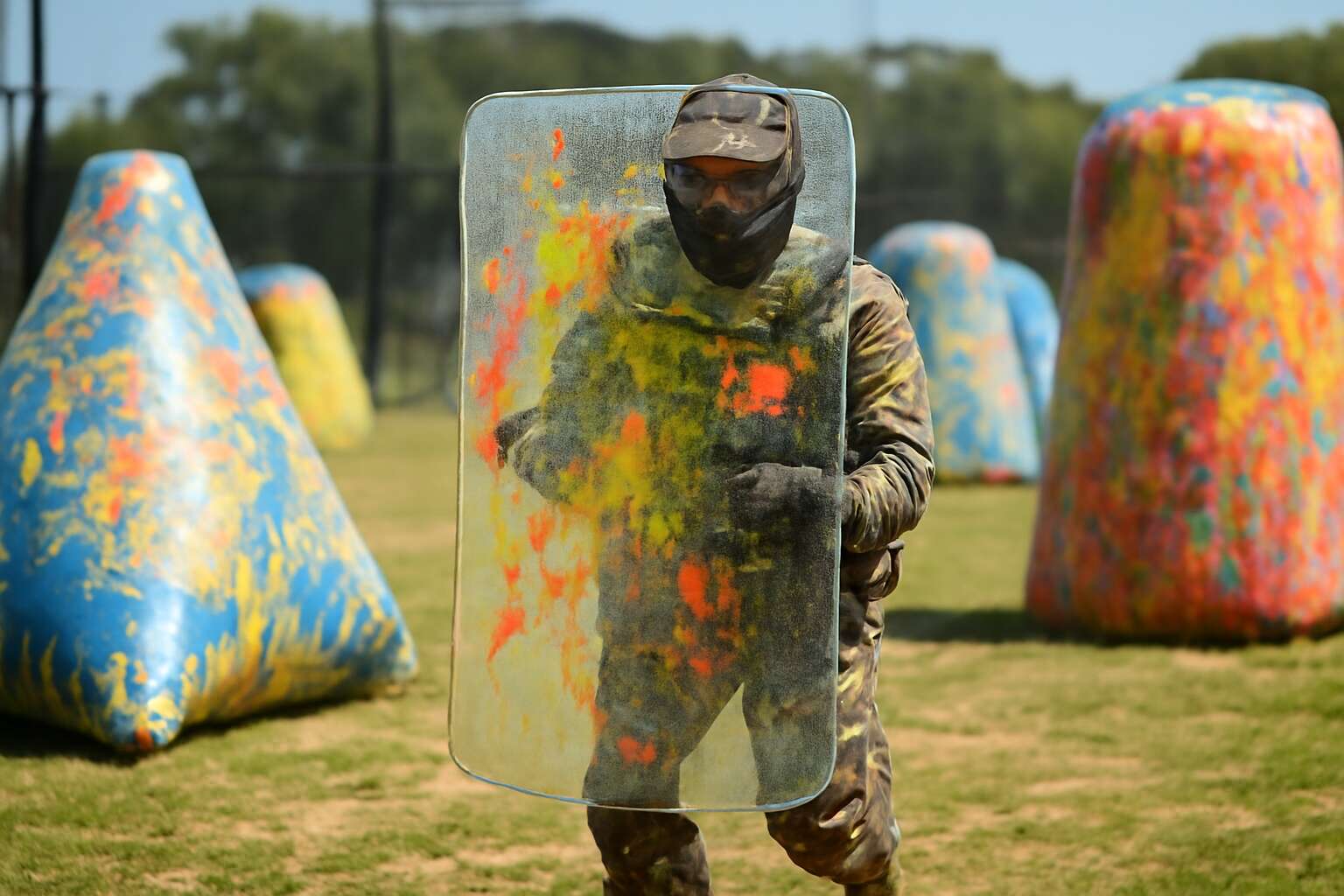
Across South Africa’s vibrant paintball arenas, rules gleam like armor in a sunlit citadel. A seasoned marshal once whispered a creed: rules shield us while wonder roams free. So, are riot shields allowed in paintball? The answer varies by province and venue; there is no single nationwide decree, and many fields restrict shields that alter engagement dynamics or obscure safety protocols.
National and regional regulations emphasize eye protection, velocity limits, and clearly marked safe zones. Operators shoulder the duty to enforce PPE standards and align with municipal bylaws, so the landscape becomes a layered map where field policies and regional guidelines sculpt what equipment may accompany players during battle.
- Equipment approvals and safety standards
- Venue policies and referee oversight
Field policies on protective gear and shields
Paintball in South Africa wears safety like a badge of honor, not a fashion statement. So, are riot shields allowed in paintball? The answer is not universal; it’s carved by province, venue, and the marshal’s eye, with many fields restricting gear that shifts engagement or bypasses safety checks.
Field policies hinge on three pillars: approvals, visibility, and enforcement. Where allowed, shields may be subject to size, transparency, and impact on line-of-sight.
- Equipment approvals and safety standards
- Shields that do not obscure vision
- Referee oversight during play
The landscape remains layered and field-specific.
Age restrictions and safety certifications
The drumbeat of safety marches through South Africa’s paintball arenas, turning every session into a ritual of discipline. The question at its core is ‘are riot shields allowed in paintball’, and the answer shifts with province, venue, and the marshal’s eye, as many fields prune gear that shifts engagement or slips past checks.
Legal status buckles under jurisdiction, yet the rhythm remains: age restrictions and safety certifications define who may step onto the field. Minimum ages range from 12 to 16, often with guardian consent, and always with a safety briefing. Participants must wear approved eye protection and meet field safety standards during play.
- Minimum age requirements
- Certified eye protection and safety briefing
- Field-specific shield policies and referee oversight
The landscape remains layered.
Enforcement, penalties, and compliance
South Africa’s paintball arenas thrum with a disciplined, almost ceremonial rhythm—safety first, always. “Safety is non-negotiable,” a veteran marshal reminds us, and I’ve seen players straighten their shoulders at that whisper of authority. This is where the question ‘are riot shields allowed in paintball’ becomes a hinge on jurisdiction and the marshal’s eye, bending to province, venue, and how a field defines fair engagement.
- Penalties range from removal and bans for the day to fines or legal action in cases of reckless use.
- Compliance hinges on certified eye protection, safety briefing completion, and ongoing gear checks by referees.
- Field-specific shield policies, enforced by supervisor oversight, ensure consistent safety standards across sessions.
Compliance operates as a living contract among field, player, and marshal; when rules are observed, the rhythm of the game stays electric and accountability travels with every call and whistle.
Equipment compatibility and safety considerations
Riot shields material, weight, and ergonomics
In South Africa’s vibrant arenas, safety gear doubles as storytelling. Field surveys report 68% of players feel more assured when shields balance protection with freedom of movement. “Protection is a partner on the field,” a veteran notes, and every match tests that partnership with grace.
When considering are riot shields allowed in paintball, material choice matters. Polycarbonate composites deliver clarity and strength; aluminum and fiberglass blends trim weight without surrendering durability. Observers note shields commonly fall in the 1.2 to 2.5 kg range, preserving stance and sweep, while remaining compatible with standard masks and gear.
- Materials: polycarbonate, fiberglass, aluminum blends
- Weight range: 1.2–2.5 kg for maneuverability
- Ergonomics: contoured grips, adjustable straps, padding
Gear that moves with you feels like a partner on the field, not a burden—I’ve watched players glide with shields that become a quiet hymn to resilience.
Impact tolerance with paintball projectiles
On South Africa’s dusty fields, a shield that breathes with you becomes half the battle. The field debate often returns to are riot shields allowed in paintball, with answers anchored in compatibility: it must clear your mask, balance the arm, and avoid snagging on padding. Impact tolerance matters too—polycarbonate cores shrug off fast projectiles while preserving posture and sprint capability.
- Mask clearance during rapid movements
- Strap adjustability that keeps the shield steady
- Weight distribution to maintain a natural stance
Safety considerations extend to compatibility with standard masks and chest protection; ensure ventilation and visibility aren’t sacrificed. When a shield holds its line against incoming paintballs with minimal rebound and allows fluid motion, it feels less like equipment and more like an ally in a tense moment.
Field-approved shield variants and specs
Field play in South Africa’s dusty arenas demands gear that keeps pace with tempo and grit. Are riot shields allowed in paintball? A shield that breathes with you—light, balanced, and snag-free—can turn a chaotic moment into a measured exchange.
Field-approved shield variants and specs emphasize compatibility with standard masks and chest protection.
- Mask clearance and ventilation
- Balanced weight distribution
- Secure, adjustable straps
Safety considerations center on visibility and harmony with equipment; ensure your shield won’t obstruct your face or chest movement. If you’re curious about shield policy, field guidance confirms it only when specs align with gear and rules.
Alternative protective options and layering strategies
On South Africa’s dusty fields, equipment compatibility is non-negotiable. When considering are riot shields allowed in paintball, players demand a shield that breathes with you—light, balanced, snag-free—and that sits comfortably with a standard mask and chest protection. Key compatibility features include mask clearance, ventilation, balanced weight distribution, and secure, adjustable straps.
- Mask clearance
- Ventilation
- Balanced weight
- Secure, adjustable straps
Safety considerations focus on visibility and unhindered movement. A shield must not obscure the eyes or restrict chest motion; field guidance stresses that shield specs align with the rest of the kit so responses stay precise as dust swirls and tempo rises.
Alternative protective options and layering strategies offer flexibility. Consider mixing breathable underlayers, neck guards, and plastrons with a shield to build layered defense without overburdening the frame.
Field policies and safety protocols
How fields evaluate and approve new equipment
Field policies aren’t a backdrop; they shape every move on the field. In South Africa, safety protocols aren’t optional—they’re the weather under which play happens. A veteran marshal once said safety is not a box to check but the atmosphere we breathe. I’ve seen players settle when policies are clear—no arguing!
Are riot shields allowed in paintball? The answer rests on a rigorous evaluation process tailored to each field. That question—’are riot shields allowed in paintball’—drives the policy debate.
- Initial compatibility check with game rules and field layout
- Hands-on test for ergonomic handling, weight, and visibility
- Safety staff review of impact tolerance and real-world durability
Only after those steps does equipment receive field-approved status. Staff training and ongoing monitoring keep safety at the center of play.
Liability, waivers, and field liability limits
Field policies aren’t a backdrop; they’re the weather shaping every paintball decision. The question ‘are riot shields allowed in paintball’ isn’t gadgetry; it’s risk management in South Africa’s arenas. When policies are clear, players act with confidence.
Liability, waivers, and field liability limits are the safety spine. These documents clarify risk, assign responsibility, and pin down what the field will cover if something goes wrong. They spell out the core elements, ensuring everyone knows the boundaries.
With those guardrails, safety staff enforce rules, and players know what’s expected in South Africa’s venues.
Training requirements and usage guidelines
Field policies address the question are riot shields allowed in paintball and are designed to standardize safety in South Africa arenas. Training staff ensure players understand the shield’s role, how it integrates with PPE, and how it affects maneuvering on the field. These protocols minimize risk while keeping play fair.
Training requirements and usage guidelines emphasize formal briefing, supervised practice, and equipment checks. The answer to are riot shields allowed in paintball is clarified through field-specific certification, and usage is restricted to approved shields meeting diameter and weight specs. Here are key considerations:
- Pre-game safety briefing
- Equipment inspection and maintenance
- Authorized roles and shield placement
Field safety staff enforce these rules to keep South Africa’s arenas accountable and transparent, reinforcing responsibility for both players and venues.
Emergency procedures when shields are in use
South Africa’s paintball fields anchor play with a steadfast creed: safety choreographs every maneuver. “Safety isn’t a pause in play; it’s the drumbeat that keeps us in the game,” says a veteran field marshal, and the cadence informs field policies. The question are riot shields allowed in paintball sits at the intersection of design and discipline—field-specific certifications, shield diameter and weight specs, and seamless PPE integration ensure consistent practice across venues.
- Cease-fire and hold position to assess the shield’s condition and surrounding players
- Field safety staff conduct equipment inspection and verification of PPE compatibility
- Injury assessment and rapid triage if contact occurs
- Incident logging and post-event review for ongoing improvement
These protocols are the quiet guardians of accountability, ensuring that South Africa’s arenas stay transparent and responsible for players and venues alike.
Best practices for players and decision factors
How to consult your field about shield usage
South African fields know shield etiquette beats brute bravado, turning chaos into choreography. A field poll reveals 63% of skirmishes stall over shield mishaps, not splat marks. The question “are riot shields allowed in paintball” hinges on field approval, and your plan must move with the tempo, not your ego.
- Keep mobility: angle the shield to breathe and pivot without smacking teammates
- Communicate before charging: call shield usage and lanes aloud
- Balance weight: choose a shield you can carry for a full round
- Practice grip and stance in drills to reduce fatigue
Decision factors hinge on context: layout, pace, and role. A nimble marker may crave a lighter shield that breathes; a heavier guardian wants protection without slowing the game.
To consult your field, start with a quick outreach: confirm policy, sanctioned shield specs, and lane etiquette. A field-specific yes (or no) keeps teammates aligned and battles brisk.
When riot shields are advantageous or discouraged
Shield versatility can swing a skirmish from chaos to choreography, but it demands judgment as sharp as your marker’s hop. When you ask are riot shields allowed in paintball, the answer dances with field policy and the flow of play. Decision factors hinge on layout, pace, and role: a nimble marker may crave a lighter shield that breathes; a heavier guardian wants protection without slowing the game.
Best practices for players center on balance and awareness.
- Weight, ergonomics, and breathability
- Visibility and maneuverability in lanes
- Team communication to coordinate shield use
A field-specific yes (or no) keeps teams aligned and battles brisk, ensuring everyone understands when a shield is advantageous or discouraged in play.
Maintenance and inspection protocols
Best practices for players hinge on balance, awareness, and ruthless self-critique. A lighter shield breathes with you; a heavier guardian must be dialed in so it doesn’t slow the run to contact. are riot shields allowed in paintball isn’t mere trivia—it frames field tempo, visibility, and your role across SA clubs and fields. In tight lanes, clear signals and concise comms keep teams synchronized, while posture and stance counter fatigue. The moral core remains: gear should amplify decision making, not weigh you down.
Maintenance and inspection protocols keep shields trustworthy. After each session, run quick checks: mounts secure, fasteners intact, surface free of cracks, and straps free of fray. Clean with mild soap and dry thoroughly to prevent corrosion. Store in a ventilated, dry spot to preserve integrity.
- Inspect straps and fasteners for wear
- Check shield surface for cracks and chips
- Test visibility and mounting alignment
Cost, durability, and long-term value
Across South Africa’s top paintball fields, the shield is more than armor—it’s a decision lever that can tilt a game in a single lane. The question lingers: “are riot shields allowed in paintball.” Field policies, field tempo, and visibility all shape tempo; a well-chosen shield preserves line-of-sight under pressure, turning defensive moments into tactical advantages.
When weighing options, the decision factors—cost, durability, and long-term value—keep gear aligned with strategy.
- Cost: upfront price versus replacement cycles
- Durability: materials, impact tolerance, design, and maintenance needs
- Long-term value: resale potential, field compatibility, and adaptability to layered protection
In South Africa’s clubs, the right shield remains a trusted ally—like a quiet sentinel—that preserves speed and cover without surrendering sense. The aim is gear that amplifies decision making and field tempo, not a burden that slows the run to contact.
Real-world scenarios and case studies
In South Africa’s most competitive fields, a riot shield does more than stop paint; it reshapes tempo. The question are riot shields allowed in paintball isn’t academic—it’s a live factor that can tilt a lane in a heartbeat. Players learn to read the field, weigh risk, and decide before the whistle. The shield becomes a quiet partner in negotiation, a shelter for speed and sight when pressure mounts.
- Field A allows compact poly shields in certain lanes; requires quick checks and fosters aggressive play.
- Field B restricts shields to low-profile designs to preserve visibility; penalties apply for misuse.
- Field C uses a rotation policy during breaks to manage tempo; teams adapt their layouts accordingly.
Real-world decisions hinge on context—what work in one club can falter in another. Best practices for players revolve around staying adaptable, keeping line-of-sight intact, and respecting field rules while reading opponents’ tempo.
0 Comments