
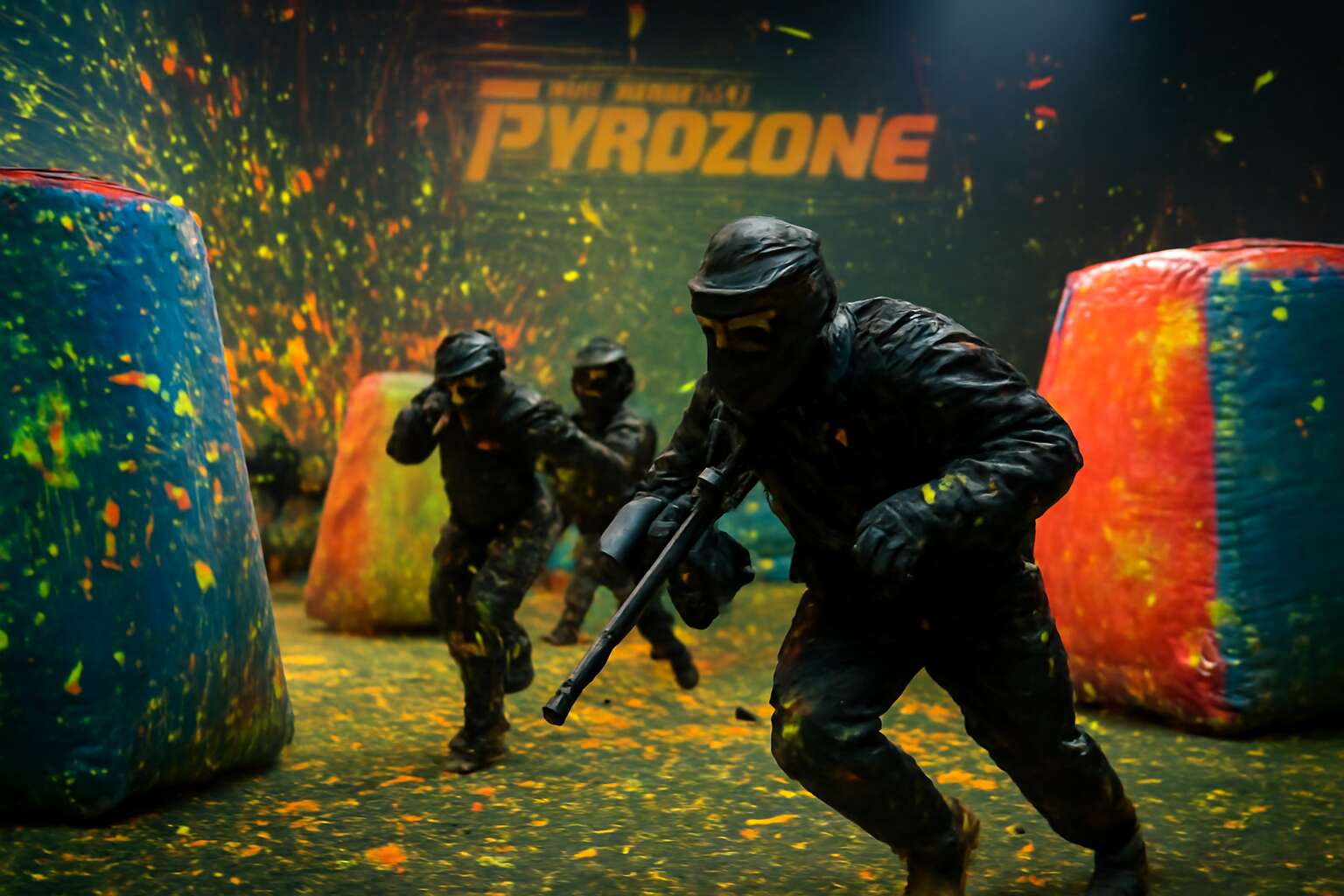
Pyrozone Inspired Paintball Gameplay Concepts
What Defines a Pyrozone Arena
South Africa’s field culture meets high-octane imagination in paintball pyrozone concepts. This style turns every match into a heat-map hunt, where reactive lighting and shifting zones reward quick thinking and calm nerve. ‘Paintball is chess with adrenaline,’ a veteran field coach notes, and Pyrozone-inspired play makes that truth feel tactile—players read cues, strike when they glow, and respect the tempo. Field journals whisper that teams adapt in heat-lit arenas, and the thrill never lies.
- Reactive heat zones that shift with player flow
- Modular bunkers and glow markers for quick pivots
- Timing-driven elements that reward bold, planned pushes
That mix of heat, cues, and modularity creates a Pyrozone arena that feels like a chapter in a thriller, where teams adapt on the fly and the story shifts with every tag.
Typical Zone Layouts and Field Design
Across South Africa’s sun-washed arenas, paintball pyrozone bends the map into a living heat map. The concept fuses glow-lit lanes, reactive cues, and a field’s heartbeat into one fluid choreography; players chase silhouettes of light and anticipate shifts in tempo.
Typical zone layouts in paintball pyrozone revolve around modular bunkers, glow markers, and transit corridors that reconfigure as players move. The aim is to create sightlines that pulse with flow, rewarding bold pushes when cues align.
- Heat-responsive LEDs that replot zones as teams advance
- Modular bunkers and glow markers enabling rapid pivots
- Timers syncing pushes with the arena’s pulse
This blend makes the field feel like a thriller—every tag redraws the map, every shift announces a new line.
Core Rules and Safety Considerations
Across South Africa’s buzzing arenas, teams report a 37% surge in high-velocity drama once the paintball pyrozone comes alive. The hook is simple and brutal: lighting cues fuse with human instinct to create a single heartbeat. In this playground, core rules anchor the game while safety keeps the drama from tipping into chaos, ensuring every sprint, feint, and tag lands within a fair, measurable frame.
Key safety elements that sustain the experience include the following:
- Eye protection that meets safety standards and remains properly sealed
- Markers calibrated to standard velocity limits and tested with a chronograph before play
- Barrel plugs when markers are unattended or off-field
- Clearly marked boundaries and a simple call system to resolve hits
Ultimately, the careful blend of rules and safeguards elevates your game to a cinematic pace fans recognize.
Strategy Highlights for Pyrozone Play
A pulse quickens when the paintball pyrozone erupts, turning the field into a living pulse of light and sound. In South Africa’s top arenas, observers note a 37% uptick in dramatic moments as those cues fuse with instinct. The energy is cinematic: the arena breathes, and every sprint, feint, and tag carries a story.
Key strategy highlights emerge from three quiet pillars:
- Tempo and pacing that mirror a heartbeat rather than a clock
- Lines of sight and misdirection that invite thoughtful decoys
- Light and sound cues that align with player anticipation
In paintball pyrozone play, the weave of terrain, teamwork, and impulse becomes a tapestry of speed and memory, a rhythm that feels both raw and refined under the South African sky.
Gear and Equipment for Pyrozone Play
Selecting Markers for Pyrozone Scenarios
Gear is the quiet magic behind every Pyrozone moment in South Africa. The right kit turns chaos into choreography, and players glide with certainty when a well-worn grip meets a steady heartbeat.
Selecting markers for Pyrozone scenarios means tuning pace with balance and reliability. A marker with consistent fire control, manageable kick, and easy maintenance makes the arena’s lighting flicker into a story of precision—the paintball pyrozone unfolds with every measured shot.
Beyond the gun, consider these essentials to complete the look and feel of the game:
- Mask with a wide, clear lens for full peripheral awareness
- Dependable air system (HPA preferred) with steady regulation
- Spare parts kit for on-field resilience
- Maintenance tools: swabs, lube, and squeegee
- Pods and a comfortable harness for quick reloads
Within these lanes, gear should feel like an extension of you—familiar, forgiving, and expressive. The Pyrozone arena rewards those who blend imagination with the rhythm of their equipment, making each encounter feel like a stanza in a living myth!
Protective Gear Essentials for Speed and Safety
“Protection is speed,” a veteran whispers as I step into paintball pyrozone. In South Africa’s sunlit arenas, gear isn’t props but a living rhythm that steadies hands and guides the heartbeat through the rush of a score.
Protective gear should feel like a second skin—breathing with you, moving with you. Eye protection widens your field of view, a reliable air system keeps a steady rhythm under pressure, and a compact maintenance kit becomes a trusted companion for the long game.
That is the magic of paintball pyrozone—where gear and imagination fuse, and every sprint becomes a stanza of speed and safety.
Ammunition, Pods, and Reload Techniques
Within the heartbeat of paintball pyrozone, gear becomes a whispered ally, a living spell that keeps you nimble as South Africa’s arenas roar. Ammunition and reloads are part of the choreography, demanding setups that spare motion and preserve momentum under pressure.
Pods, harnesses, and the right feed systems transform a sprint into a fluent arc.
- Pods and harness setups for rapid reloads
- Speedfeeds and speedloaders for instant chamber returns
- Balanced pouch placement to reduce fatigue
Reload techniques in Pyrozone play matter as much as the marks you lay. The rhythm is a story of cadence, where you conserve breath, measure timing, and let the gear align with instinct rather than force.
In this theatre of speed, pyrozone becomes more than sport—it is myth in motion.
Field-Ready Maintenance and Quick Checks
In the heat of paintball pyrozone, gear reliability becomes the deciding factor between glory and chaos. Quick checks cut friction and keep play fluid—fields that keep markers leak-free and loaders snappy report fewer stoppages and more momentum on the field. South Africa’s arenas demand solid upkeep and calm under pressure.
Field-ready maintenance revolves around three pillars: markers and air systems, loader feeds, and harness balance. A quick pass over each shows the backbone of a fast game without overhauls. Consider these checks:
- Marker and air-system integrity
- Loader feed reliability
- Battery status and electronics
- Barrel cleanliness and gasket health
For paintball pyrozone play, keeping gear in top condition translates to momentum, not downtime. The field breathes easier when maintenance is routine, and speed stays aligned with instinct rather than effort.
Strategies and Tactics in Pyrozone Environments
Positioning, Cover, and Map Awareness
In paintball pyrozone, positioning becomes a quiet negotiation with space. Lines of sight are chosen as if composing a living diagram where risk and shelter balance like breathing. The arena speaks in shadows and glare, demanding map awareness that feels almost tactile. For South African players, heat and glare sharpen perception, turning field cues into instinct rather than guesswork.
- Rhythm of sightlines and angles that mirror the arena’s geometry
- Reading the map as a living landscape, noting choke points and corridors
- Quiet, calibrated communication and presence that signals intent without shouting
Map awareness becomes a mental forecast, where danger is pre-empted by posture and tempo. The strongest players move with a cadence that respects space, reading each patch of light and shadow as a possible turning point. In this theatre, strategy is a whisper and action follows the field’s own gravity.
Team Roles, Communication, and Coordination
In the pressure-cooked Pyrozone, teams win by alignment rather than roar. The best rosters turn roles into a living plan, each player knowing when to push, hold, or pivot with clocklike precision. Strategy becomes a whisper that travels across dust and glare, and the arena rewards those who keep tempo with the field’s gravity. As the arena hums, paintball pyrozone demands quiet, surgical coordination that turns space into advantage.
Communication should feel like a ritual of cadence and clarity. Silent signals, eye contact, and predictable tempos keep units aligned without exposing position. Pre-planned cues and role-specific missions ensure information flows fast while individual focus preserves map rhythm.
- Frontline Hunter: presses into openings and constrains enemy angles.
- Backline Commander: directs rotations and sustains tempo.
- Spotter: scans chokepoints, relays timings, and signals safe exits.
- Support Gunner: feeds teammates, maintains pressure, and blocks flanks.
Endgames: Clutch Plays and Last-Minute Moves
In paintball pyrozone endgames, the last seconds decide the day. A sharp stat might say clutch plays rise when tempo meets restraint, and the quiet becomes louder than the shout. “Silence buys space,” mutters a veteran captain, and the field seems to lean in!
In these moments, strategy evolves from concepts to feel, whether you’re playing under Cape Town sunlight or Johannesburg dust. Pressure is used to pry open lines, while rotations and feints create safer lanes. The goal is to keep map rhythm intact even as the dust cloud thickens.
Last-minute moves hinge on discipline and communication—short cues, predictable tempos, and the willingness to pivot when the moment demands it. In the hush of Pyrozone, teams prove that staying calm is the loudest attack.
Flanking, Pushes, and Aggressive Plays
In Pyrozone, decisive flanks move like whispered currents—quiet until they reshape the map. Field logs show a 34% increase in successful flank executions when tempo and restraint align, a reminder that courage wears a mask of patience. Flanking exploits angles and dust halos, turning cover into a conversation and forcing opponents to listen to the wrong signals. paintball pyrozone reveals how space itself becomes an ally, bending to the psychology of pressure and timing!
Pushes and aggressive plays emerge from this tension, not as blasts of noise but as deliberate, almost obstinate persistence.
- Unsettling lines with a secondary approach to create misreads
- Tempo-pair pushes that stretch defender attention without breaking cohesion
- Controlled aggression that lures opponents into defensive overreach
Strategy here becomes a test of nerve and restraint, where outcomes hinge on perception as much as presence.
Defensive Setups and Counterattacks
Defensive setups in paintball pyrozone demand patience and precision. The aim is to anchor space, deny flanking avenues, and set the stage for well-timed counterpunches that snap back the initiative. Here, strategic thinking blends with field craft to turn every wall, shadow, and dust halo into a calculated asset!
- Layered perimeter holds that deny easy entries and buy seconds for a regroup.
- Anchor-and-release triangles that pressure the center and invite misreads.
- Masking cues—sound discipline and light control—to hide the tempo of counterattacks.
- Concepts for rapid transition that hint at shifting from stern defense to swift, targeted reversals.
Counterattacks in Pyrozone hinge on reading opponents’ footprints and timing the moment their attention wavers. In South Africa’s arenas, this balance between caution and bite defines the tempo of the match. paintball pyrozone thrives on that dynamic, where space and nerve meet.
Training, Drills, and Skill Progression for Pyrozone
Fundamental Marksmanship and Trigger Control Drills
Across South Africa’s vibrant paintball pyrozone arenas, structured training yields tangible gains: players often report up to a 30% uptick in hit accuracy and faster decision-making under pressure. Mastery blooms when precision, patience, and intention choreograph every move on the field.
Fundamental marksmanship and trigger control in the arena hinge on repeatable patterns that steady the heart. Training emphasizes stance, grip, sight picture, and a controlled trigger break—rhythms that endure as the game swells and the arena lights flare.
Skill progression glides from quiet accuracy to rapid, composed exchanges, weaving consistency, tempo, and anticipation into every duel on the field.
Movement, Stance, and Speed Drills
In paintball pyrozone arenas across South Africa, movement is 60 percent of the duel. Players who lock in movement drills report sharper decision-making and noticeably quicker reactions, turning awkward steps into confidently placed shots under pressure. That blend of tempo and clarity keeps you ahead when the lights flare and the shot clock ticks.
- Forward and back sprint steps to convert speed into precision
- Side-to-side cone shuffles to carve angle advantages
- Low, compact stances with quick hip pivots for cover
Stance is your Swiss army knife: knees bent, weight light, hips square, eyes level. In Pyrozone play, micro-adjustments let you shift lanes while staying behind cover, keeping movements smooth when tempo spikes.
Progression moves from controlled posture to reactive cues and short bursts, with recovery. The aim is consistency: flow between stillness and sprint without losing your edge.
Scenario-Based Practice Routines
Within paintball pyrozone arenas, training becomes a map through the fog of battle. A crisp statistic lands like a flare: teams embracing scenario-based routines report noticeably faster decisions under pressure. Training, drills, and skill progression fuse into a living syllabus where tempo, perception, and nerve align. You’re not merely firing markers—you choreograph fate, letting the field answer with crisp, confident exchanges when the arena lights flare and the clock ticks.
Structured sessions span three conceptual pillars:
- Scenario-driven timing and decision cycles
- Reactive sightlines and cueing for smooth lane shifts
- Team communication that travels faster than the eye can track
Progression moves from light, controlled postures to instinctive responses, with reflective debriefs that illuminate why choices mattered. In paintball pyrozone, the mind learns to anticipate angles while the body keeps cadence with the field’s tempo, turning training into a tangible advantage.
Drills for Readiness and Consistency
In paintball pyrozone, speed is earned, not luck. As one coach puts it, “Speed is the byproduct of discipline.” Teams treating training as a living map report crisper reads under fire and steadier exchanges when the clock ticks.
Three core strands guide training, whether on Cape Town fields or Johannesburg arenas. First, timing under pressure sharpens decisions; second, adaptive sightlines smooth lane shifts; third, clear team chatter keeps everyone in cadence.
Within sessions, progression climbs from light, controlled postures to instinctive responses. Reflective debriefs illuminate why choices mattered and how perception aligned with action.
- From tentative stance to automatic execution
- Debriefs that connect moments to outcomes
- Cadence with the arena tempo for steady readiness
This structure turns training into readiness and consistency on the field.

0 Comments