
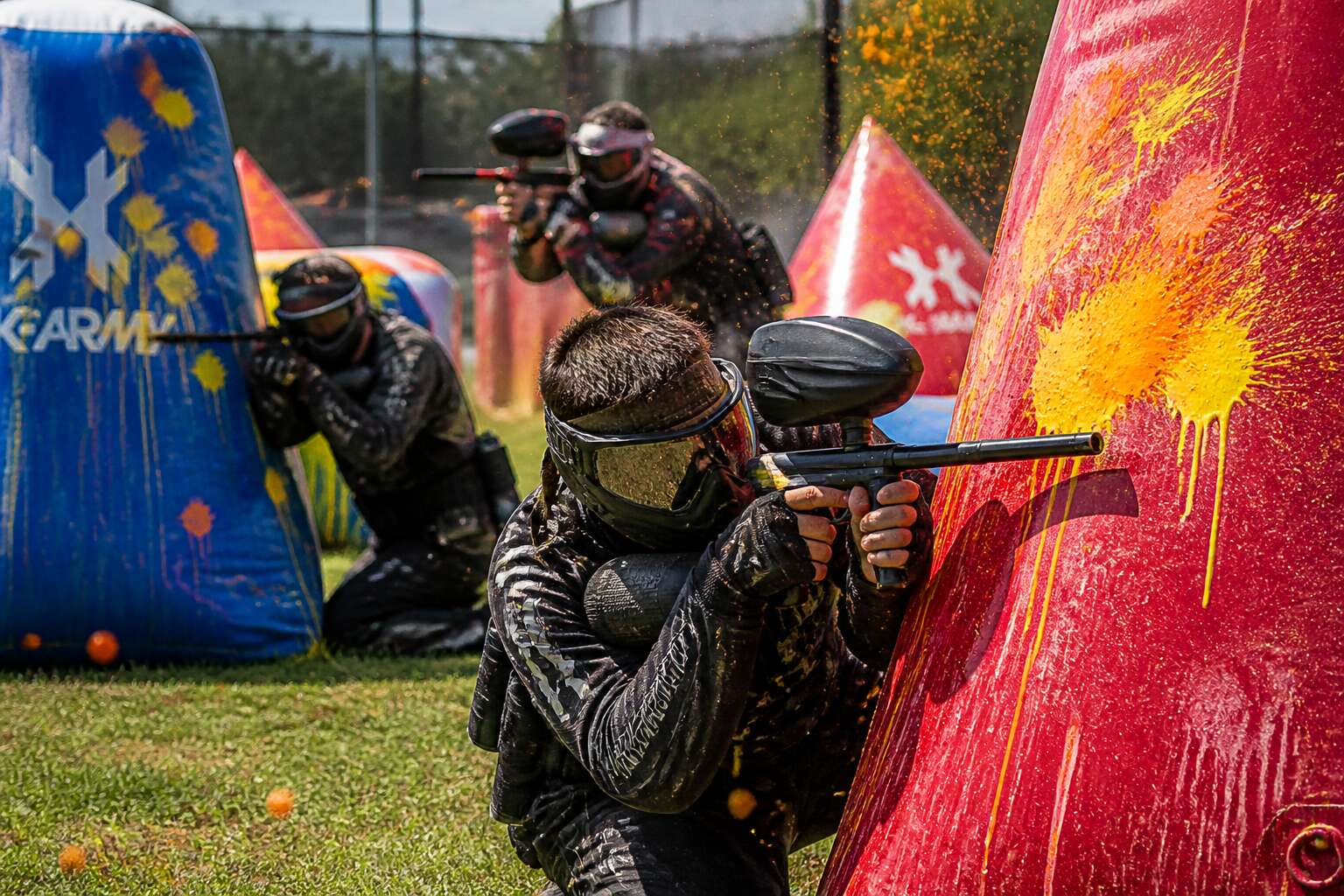
Tactical Team Sports Beyond Paintball
Why Players Seek Similar Experiences
Every paintball player eventually reaches a threshold where the scent of crushed paint and the pop of a marker feels familiar. The adrenaline remains, but the novelty fades. This is when many veterans start searching for something with a similar cocktail of strategy, teamwork, and physical exertion, but with a different flavour. The core appeal is rarely the equipment itself; it is the mental chess match played under high pressure.
The market has responded with several options that scratch this specific itch. Airsoft offers a simulation of military engagements with realistic replicas, while tactical laser tag provides zero-pain, high-tech skirmishes. Some players gravitate toward scenario-based shooting ranges or even close-quarters combat training that prioritises communication over ammunition. These alternatives share the fundamental DNA of paintball like the fast decision making and the trust in your squad. The best experiences replicate that profound sense of shared purpose.
What these activities offer is a test of composure. You are forced to read body language, manage limited information, and execute a plan while your heart rate spikes. The specifics we look for are consistent:
- Authentic consequences for tactical errors
- Clear objectives that require group coordination
- An adrenaline spike derived from direct competition
The transition often hinges on the physical feedback loop. In paintball, you feel the impact of a hit. In other sports, the feedback might be a buzzer, a sensor reading, or a referee’s call. Yet the desire remains connected to the purity of pitting your wits against an opposing team in a dynamic, moving puzzle. For the South African player, the availability of vast outdoor terrains makes these transition sports particularly appealing, allowing for the same tactical maneuvering that the bushveld demands.
Key Features of High-Adrenaline Battle Games
High-adrenaline battle games operate on the same principles. Every round demands spatial awareness, split-second calls, and the willingness to move when your instincts tell you to freeze. The gear changes, but for anyone chasing a paintball like rush, the core decisions remain: read the field, trust your flank, commit to the play.
In South Africa, these games often unfold across koppies and open veld, where uneven ground punishes hesitation and rewards aggressive positioning. I have watched teams collapse when the objective shifts mid-round, and the best formats strip away distractions to leave pure tactical friction.
Consider what separates a good skirmish from a forgettable one!
- Clear win conditions that force genuine trade-offs
- Limited respawns that raise the cost of every decision
- A referee or sensor system that keeps outcomes unambiguous
When these elements align, the game becomes a direct contest of movement and fire between teams.
Choosing Between Outdoor and Indoor Fields
Outdoor fields in South Africa demand a different skillset than their indoor counterparts. The koppies and open veld force players to read natural cover, account for wind, and manage longer engagement distances. Indoor arenas compress the action, turning every corner into a potential ambush point.
For teams exploring tactical sports beyond paintball like options, the choice often comes down to climate and endurance. Outdoor games test your navigation and concealment. Indoor games test your reaction speed and communication under pressure.
Consider the practical differences:
– Outdoor fields require sturdy boots and weather-proof gear
– Indoor arenas allow faster rounds and tighter margins
– Mixed terrain rewards map memory and flanking routes
The venue shapes the game more than the weapon system does. I have played both, and a paintball like experience on the Highveld feels entirely different from one in a warehouse in Johannesburg.
Top Alternatives for Combat Simulation
Airsoft: Realism and Range
Every year, a significant number of players transition to airsoft for its extended engagement distances. The primary allure is the 6mm plastic projectile, which offers a realistic ballistic arc that paintballs cannot match. This allows for tactical maneuvers across larger fields, making it a top alternative for a paintball like experience without the messy cleanup. The lower velocity limits the close-range impact, fostering a game built on precision and angles rather than pure spray.
The gear itself is where the separation becomes stark. High-end replicas often feature functioning bolt catches and realistic weight distribution.
– Gas blowback rifles simulate recoil and require the same maintenance as a real firearm.
– Mil-sim vests and plate carriers offer modular pouches for specific loadouts.
– Optics with actual magnification are common, altering the entire sightline strategy.
This equipment focus shifts the player’s mindset from casual play to a more dedicated simulation. It is a hobby that rewards patience and fieldcraft over raw speed, which is a substantial departure from the standard paintball arena. For South African players seeking a deep and methodical challenge, the realistic hardware and increased range demand a slower, more cerebral approach to each skirmish.
Laser Tag: A Safe Family-Friendly Option
Laser tag replaces physical projectiles with infrared beams and sensor vests. Nobody feels the sting of an impact, so the game stays purely about movement, teamwork, and clever angles. This makes it the most approachable paintball like experience for younger players, birthday groups, or families with mixed comfort levels.
The arenas themselves contribute to the appeal. Glow-in-the-dark mazes, inflatable bunkers, and multi-level structures create an immersive environment where hits register with sound and light rather than splatter. For South African families, laser tag offers entertainment without protective gear beyond basic eyewear, and venues accommodate children of varying ages.
A few features stand out at most venues:
– Instant hit detection through vibrating vests and audio cues
– Multiple game modes beyond elimination, including capture the flag style objectives
– No clean-up time after a match ends
Because the technology handles scoring automatically, parents can participate alongside kids without technical knowledge. Laser tag remains a gentle introduction to the broader world of paintball like adventure sports, prioritizing fun over physical confrontation.
Nerf Battles: Accessible and Creative
A foam dart to the shoulder never leaves a mark, but it still triggers the same competitive rush. Nerf battles offer a paintball like experience built on imagination rather than expensive markers or protective padding. Families across South Africa turn garages and parks into obstacle courses, where a cardboard bunker becomes cover and a plastic blaster becomes a serious tactical tool.
- Modular blaster designs allow quick modifications for range or fire rate.
- Household objects transform into terrain features, keeping setup costs near zero.
- Scoring systems can stay simple, like first tag wins, or expand into complex team objectives.
What stands out is the sheer versatility. I have watched children develop their own game rules, tweaking everything from reload speeds to respawn zones. This hands-on creativity makes Nerf battles a genuine combat simulation that rewards strategy without demanding physical toughness.
Scenario-Based Live Action Role-Playing
Scenario based live action role-playing focuses on narrative. Players use theatrical props, coded gestures, and adjudicated outcomes. A South African bushveld becomes a contested border. A warehouse becomes a derelict research station. Every encounter advances a story. This format rewards negotiation, observation, and quick thinking more than aim.
Some groups use foam weaponry for tactile feedback. Others use gesture-based combat systems where a referee interprets actions. I have watched this format reward players who would struggle in a traditional firefight. The key feature is consequence. Choose poorly and your character suffers. Choose well and you unlock new objectives!
The paintball like thrill remains, but the pacing changes. Slow-burn tension replaces constant firefights. Players who want tactical decision making without physical bruises find this a compelling option.
Comparing Gameplay Mechanics and Equipment
Impact Force and Safety Gear Requirements
Some games reward snap shooting and aggressive flanking, while others demand disciplined suppression fire. This contrast in gameplay mechanics shapes every decision on the field. A paintball like experience based on speed pushes players to perfect slide-and-shoot techniques, whereas a tactical scenario forces careful angle management. The equipment impact also differs. A heavier marker changes your swing speed and stamina, which alters how you clear a bunker. Your paint capacity influences whether you can lay down cover fire or must conserve every shot.
Safety gear requirements remain constant, however. Full seal masks are non negotiable, and padded clothing protects against welts at close range. Consider how these factors interact:
– Compact markers allow faster movement but hold fewer shots.
– Full length barrels improve accuracy yet reduce maneuverability.
– Thick vests limit agility while offering better protection.
Choosing your loadout changes the game entirely. Players who understand this balance often gain an edge before the first whistle blows.
Weapon Types and Ammunition Costs
A single paintball costs a fraction of a bullet, but your shooting style decides its worth. In a paintball like arena, gameplay mechanics vary widely between speedball and woodsball. Speedball rewards fast slide and shoot play, so compact markers with lower ammunition capacity suit the pace. Woodsball demands precision shooting, favoring longer barrels that tighten accuracy at range. Ammunition costs then push strategy further. I regularly see players empty a hopper in seconds, only to regret the bill afterward.
Consider these tradeoffs:
Weapon types also define team roles. A paintball like game where shooters respect ammo costs produces patient tactics, not reckless blasting.
Team Strategies and Objective Modes
Three seconds left, a flag in the open, and your squad chooses between suppression fire and a sprint. That decision defines objective modes in a paintball like arena. Speedball fields compress timing, rewarding rapid slides and immediate aggression. Woodsball spaces out engagements, demanding patience and accurate shots.
Equipment shapes strategy. High-capacity pods enable sustained area denial, but they add weight during bunker slides. Compact loadouts support fast flanking, yet they run out of paint at the worst moment. The objective modifies the balance. Defending a base favors heavier markers and stationary angles. Attacking a fortified position calls for mobility and coordinated distractions.
Common objective modes:
- Capture the flag, which balances speed and teamwork
- Elimination, which rewards early aggression and map control
- King of the hill, which punishes passive play
Each mode changes the meta, so a paintball like experience never feels stale.
Skill Curves and Player Experience
There is a dirty secret about comparing paintball like titles on paper. The numbers never translate. A mechanical marker teaches trigger discipline. An electronic one rewards volume. Both change how you move. My first speedball session proved this within ten minutes. I drained four pods in one exchange and missed every slide! Equipment skill curves are not uniform. They stack differently across formats:
- Pump action develops shot placement and stealth.
- Semi-automatic rewards snap shooting and lane control.
- Electronic markers favour aggression and quick reloads.
Player experience depends on this gap. Paintball like experiences live or die by the fit between gear and format. A heavier marker anchors you to a bunker. A light loadout keeps you moving. South African fields, from open grassland to dense bush, amplify those differences. Local organisers mix formats, so you must master more than one style.
Venue Logistics and Field Design
Most field designers forget that a bunker layout is a conversation between cover and movement. The best South African venues understand this instinctively. They build spaces where a pump marker can flank effectively, while still giving electronic markers room to stretch their legs. A cramped urban map punishes aggressive play. An open grassland field rewards it, but only if the grass is short enough to read player movement.
Venue logistics shape these choices before you even load your hopper. Field size determines engagement distances. Cover density dictates whether you need a lightweight loadout or can afford the extra pods. The ground underfoot matters just as much as the bunkers above it.
– Sandy soil changes how markers cycle and how quickly you tire
– Dense bush forces close quarters encounters
– Open terrain tests your lane control under pressure
– Mixed terrain demands versatility from both player and equipment
A well-designed field makes you adapt your playstyle mid-game. That adaptability is what separates a memorable paintball like experience from a standard weekend skirmish. Local venue operators who rotate layouts keep regulars honest and newcomers intrigued. The smart ones design with friction in mind, not just visual appeal.
Training and Skill Development Across Variants
Marksmanship and Movement Basics
Every shot fired in a paintball like arena is a negotiation between instinct and discipline. Marksmanship here demands more than aim; it requires breath control and a steady trigger squeeze under pressure. Players who master these fundamentals often compensate for equipment differences.
Movement basics build on this foundation. Proper footwork, such as sidestepping and low crouches, reduces exposure while maintaining shooting accuracy. A common training progression includes:
– Stance adjustments for different firing positions
– Target transitions between close and distant threats
– Movement drills that combine shooting with lateral shifts
Across variants, these skills transfer directly, whether you face rubber balls or foam darts. The psychological edge comes from repeated practice, turning conscious actions into reflexive responses.
Communication and Team Coordination
Training across variants demands adaptive repetition. Each format, from airsoft to foam darts, refines distinct reflexes. A paintball like arena teaches players to read noise and movement, then convert that awareness into decisive action. Communication binds these skills into a cohesive assault.
I have watched teams employing concise callouts gain a measurable edge. Designate roles for flanking, suppression, and recon. Use code words for enemy positions and objective shifts. Silent gestures work best in tight corridors!
- Rotate roles during practice to build flexibility
- Debrief after every match to identify miscommunication
- Drill response times for standard tactical phrases
Without such coordination, skilled individuals fragment under pressure, their shots wasted on unshared targets.
Adapting to Different Equipment Weights
Switching from a lightweight laser tag phaser to a 3 kilogram airsoft rifle changes your timing! Your arms tire faster. Your swing speed drops. Players who train across variants adapt quicker. I have seen beginners struggle with the heft of rental markers in a paintball like arena. The solution is deliberate practice with varied loads.
- Train with weighted vests to simulate heavier gear.
- Practice target transitions with both hands.
- Alternate between light and heavy replicas each session.
This builds muscle memory that ignores the tool. A player comfortable with a heavy marker reads angles better. They hold positions longer. Their shots stay consistent even when fatigue sets in. That adaptability separates hobbyists from reliable teammates on any field.
Tactical Decision-Making Drills
In a paintball like arena, the difference between winning and losing often comes down to split-second choices. Tactical decision-making drills train players to read the field, assess threats, and commit to a plan without hesitation. One effective drill involves forcing players to choose between two objectives, such as capturing a flag or holding a chokepoint, while a timer pressures the call. Another method uses randomized audio cues that signal a change in enemy positioning.
Players who practice these drills across different game formats, from airsoft to laser tag, build sharper instincts. They stop overthinking and start reacting. A simple progression might include:
- Identifying the highest value target in three seconds.
- Calling out a fallback route when overwhelmed.
- Switching from offense to defense after a teammate signals.
That structured repetition creates calm under fire. In a paintball like environment, hesitation is the real enemy. Training the mind to decide quickly, then execute, is a skill that transfers anywhere.
Physical Conditioning for Combat Sports
Physical conditioning for combat sports borrows heavily from the training methods used in mixed martial arts and tactical athletics. Players in any paintball like arena need explosive acceleration, sustained endurance, and quick recovery between sprints. A typical match involves short bursts of movement punctuated by static holds behind cover. That pattern mirrors interval training more than steady state running.
Core stability deserves special attention. Reloading, aiming, and changing firing positions all originate from the torso. Weak core muscles force players to compensate with their shoulders, which causes fatigue and poor accuracy. South African players who train outdoors also benefit from heat acclimatisation. Their cardiovascular systems adapt to higher temperatures, giving them an edge in longer tournaments.
- Box jumps develop explosive first steps off the break
- Farmer carries build grip endurance for holding markers steady
- Medicine ball throws improve rotational power for snap shooting
Recovery protocols matter as much as the training itself. Hydration and sleep quality directly influence split second reaction times. Players who neglect these fundamentals will struggle to maintain performance across a full weekend event.
Cost Comparisons and Investment Considerations
Entry Fees and Rental Packages
Entry fees in South Africa vary wildly. A basic walk-on day at a field in Gauteng might cost R200. A full rental package with paint, mask, and marker often pushes that past R500. The gap matters more than the number itself!
First-timers should compare what the package actually includes. Some venues bundle 500 paintballs. Others charge per pod. Those small differences change your real cost. A paintball like experience can feel cheap on paper, then drain your wallet at the ammo counter. Regular players know no two venues price the same way.
Consider these costs before booking:
- Field entry fee
- Marker and mask rental
- Paintball pods or hopper fill
- Protective gloves and neck protector
Your total investment depends on how often you play a paintball like game. Owning gear becomes cheaper after roughly five visits. Renting stays flexible for casual players. That trade-off shapes every budget.
Owning vs. Renting Equipment
Renting a marker and mask feels painless until you count the sessions. A basic rental package runs R150 to R250 per visit. Ten visits later you have spent R2,000 without owning a single piece of gear. A starter marker costs roughly R2,500. A thermal mask adds another R900. The crossover point is closer than most players expect.
- Entry-level marker: R2,000 to R3,500
- Thermal mask: R800 to R1,500
- Pod pack with four pods: R400 to R600
- Barrel squeegee and maintenance tools: R200 to R400
Ownership changes how you approach a paintball like weekend. You skip the rental counter and zero in on your own gear. Spare parts and cleaning kits become routine purchases. Rental keeps your cash flexible, but it never builds equity. The real question is simple: how many times will you actually play next year?
Maintenance and Replacement Expenses
Ownership shifts the conversation from entry costs to long-term care. O-rings perish, springs fatigue, and seals leak after regular play. A basic service kit costs around R250 and handles most field repairs. Replacement parts follow a predictable cycle:
- O-ring kits: R150 to R300
- Lens replacements: R350 to R700
- HPA tank hydrotesting: R300 to R500
- Lubricant and tools: R100 to R250
Scratched lenses need swapping every few months. Pods crack under repeated dives. Air tanks require hydrostatic testing every three to five years. Players who overlook these expenses face mid-game breakdowns and rushed purchases at inflated field prices. Budgeting for paintball like maintenance keeps your gear dependable and your weekends free of surprises.
Clothing and Protective Accessories
Nothing tests a budget like the gap between entry-level and tournament-grade gear. A decent loadout costs less than a mid-range smartphone, but accessories stack up quietly. Clothing matters most. A padded jersey absorbs hits that would leave welts through a regular shirt, while good gloves protect your trigger fingers during extended firefights. Paintball like any serious hobby, rewards players who invest in comfort first.
The economics shift when you compare masks, barrels, and hoppers. Entry masks cost R400, but premium thermal lenses prevent fogging and cost triple that. I always tell new players to consider this breakdown:
- Padded pants and jersey: R800 to R1,500
- Gloves and neck protectors: R200 to R400
- Cleats or sturdy boots: R600 to R1,200
These items outlast multiple marker upgrades. Protection always outranks performance in my experience. Treat paintball like a long-term pursuit and the numbers make sense. Your future welts will thank you!
Group Discounts and Event Packages
Comparing group rates shifts the economics. A single entry fee looks modest, but paintball like any organised sport rewards volume. Field owners offer sliding scales for parties of twelve or more, often dropping per head cost below R150. Event packages bundle a marker, a hundred paintballs, and a safety briefing.
Private fields change the investment logic. You pay for exclusivity, but per person price often beats walk-on rates. Off peak specials on weekday afternoons cut costs by a third.
Group deals vary in three areas:
- Marker upgrade charges
- Paintball refill rates
- Deposit refund policies
Finally, consider the group dynamic. A booking for twenty people turns a birthday into a recurring habit. Paintball like competitive fishing, builds repeat attendance through shared experience. The lowest quote rarely covers extra ammo or coaching.
Budget Planning for Regular Players
Regular players soon notice that paintball like any committed hobby carries costs beyond the entry fee. The first few outings are deceptive because rental gear hides the true expense. Once you attend twice a month, the pattern becomes clear. Fuel to the field, snacks, and lost paintballs create a quiet drain on your wallet. A dedicated budget line of R400 per month keeps this manageable.
Memberships at South African fields reward consistency. A yearly fee often includes discounted paint and free entry on slower days. Compare that with walk-on rates over three months, and the saving appears. Players who attend biweekly typically recover the membership cost by the fifth visit.
The largest variable remains paint consumption. A session with 500 shots at R60 per hundred costs R300. Reducing that to 350 shots saves R90 each outing. Over a year, that difference funds a better marker or a tournament entry. Track your averages for two months before committing to a spending plan.
– Scheduled marker servicing
– Propellant refills and tank inspections
– Replacement masks and lenses
– Travel to regional events
Each item deserves its own savings target, otherwise the total swallows your month.

0 Comments