
Safety Overview: Paintball vs Airsoft
What Each Game Is and How It Works
Safety, in the best sense, is a social contract as much as hardware. In South Africa’s popular fields, the question which is safer paintball or airsoft is decided by PPE and manners more than by physics alone.
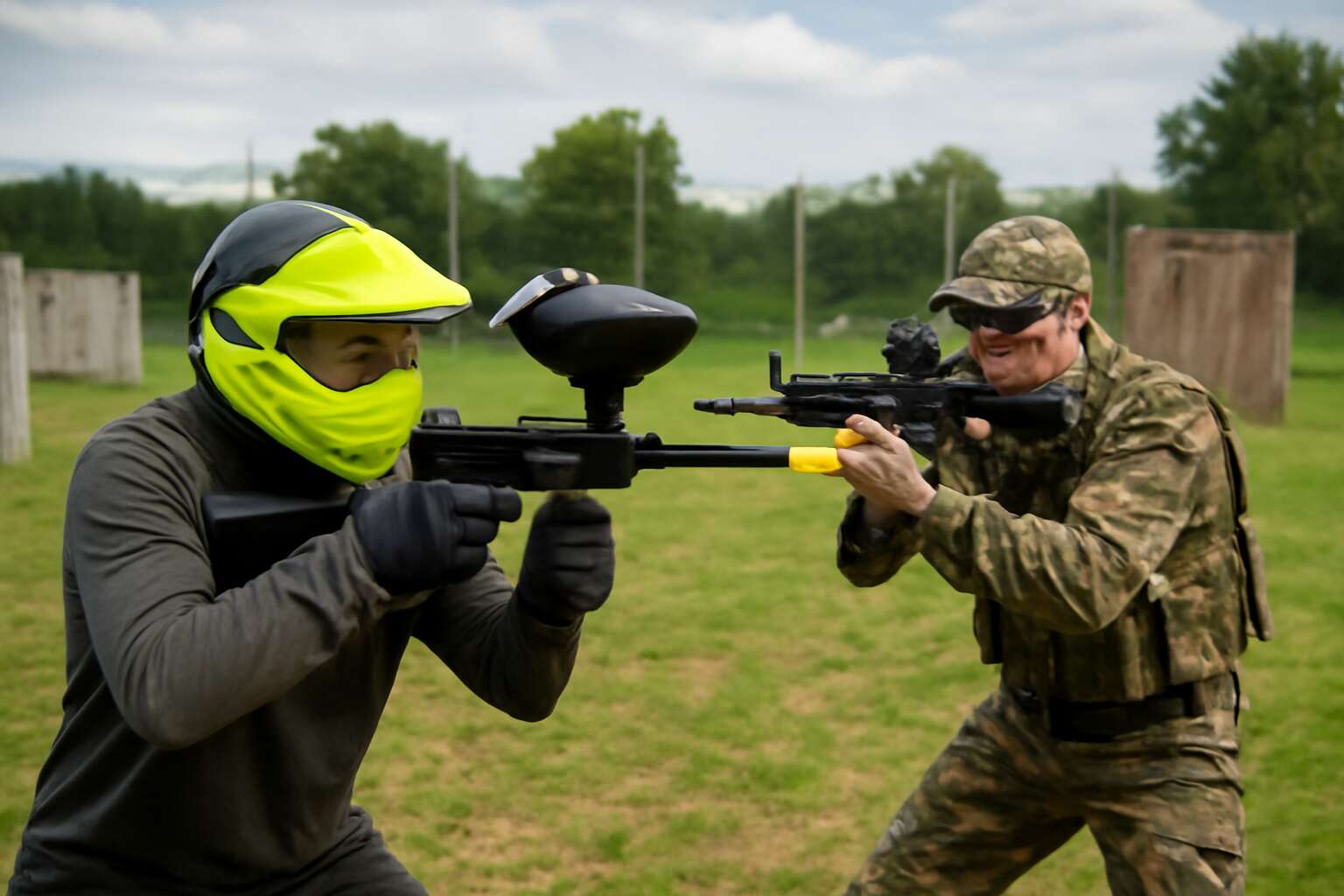
Paintball propels dye-filled rounds (.68 caliber) that burst on impact, leaving a vivid marker. Airsoft fires tiny 6mm BBs, which are lighter and travel with less energy. Both games demand eye protection and respectful field behavior.
How it works is less a mystery and more a choreography of rules. The vibe in SA venues is a blend of sport and theatre, with marshals, rate-of-fire controls, and safety checks.
- Certified eye protection and masks
- Barrel covers and game boundaries
- Regular safety briefings and field marshals
Ultimately, both offer adrenaline with accountability, and the answer to the safety question comes down to gear, briefing, and mutual respect.
Typical Protective Gear and Standards
In South Africa’s adrenaline-fueled fields, safety runs on more than physics—it’s a social contract. The difference between a skirmish that’s thrilling and one that’s reckless is protective gear and manners, reinforced by clear boundaries and mindful play.
- Certified eye protection and masks
- Barrel covers and game boundaries
- Regular safety briefings and field marshals
When players ask which is safer paintball or airsoft, they expect a clear answer. The short answer is: it hinges on gear, briefing, and mutual respect—the ingredients of a controlled, respectful field experience. In practice, both rely on the same ethos, with different equipment profiles shaping risk.
Common Injury Types in Each Sport
“Safety is not a rule—it’s the rhythm of the game,” a veteran field marshal says, and it anchors South Africa’s adrenaline-fuelled fields. In this safety overview, paintball and airsoft share a simple truth: risk shows up in how the game is played, not in the sport’s label. Readers often ask which is safer paintball or airsoft, and the answer hinges on culture and conduct.
Common injuries cluster around impact and environment. Eye injuries can be severe if protection fails; facial contusions and dental hits occur from close-range shots; skin welts and abrasions dot exposed skin; and sprains arise from rapid changes in direction on uneven terrain. In airsoft, hits to unprotected areas can cause dental or nasal injuries, while paintball’s larger hits carry greater surface impact.
Ultimately, risk hinges on field culture and mindful play, not the label of the sport—especially on South Africa’s diverse fields.
Impact and Velocity Regulations
In South Africa’s sunlit arenas, velocity and judgment duel for supremacy. Some players still ask which is safer paintball or airsoft, and the answer lies in how the game is played, not the sport’s label. A simple truth endures: regulate your pace, respect the field, and safety becomes second nature—songlike in its cadence!
Velocity regulations shape risk more than gear. I’ve watched players breathe easier when a field’s cap sets the tempo, and the counts of worry drop like rain from a storm-dark sky.
- Paintball markers are commonly capped around 280–300 fps to balance impact and control.
- Airsoft setups often run at 350–400 fps with 0.20 g BBs, with stricter limits indoors.
When culture governs conduct, both sports stay thrilling, safer, and more South African than ever.
Gear and Protective Equipment: Staying Safe
Helmet and Eye Protection Requirements
Safety is the unspoken first color of the field, and in South Africa’s radiant arenas it wears the crown of every match. The creed is simple: gear you can trust, confidence you can feel. “Safety is the first color of victory,” a field proverb reminds us. For readers asking which is safer paintball or airsoft, the emphasis on protected vision and head coverage remains constant.
Your helmet and eye protection must meet robust standards and fit precisely, locking out shards of light and air that threaten clarity. The following are core components to consider on South African fields:
- Full-face mask or goggles with polycarbonate lenses and a secure strap
- Robust helmet with padding and a snug fit
- Face shield or mouthguard to protect teeth
- Clear anti-fog lenses for reliable vision
In South Africa’s fields, gear is more than appearance—it’s trust made tangible, a quiet duty to teammates and the game.
Body Armor, Pads, and Clothing
South Africa’s fields remind us that protection crowns performance. Which is safer paintball or airsoft? The safer choice is the gear you can trust to keep you calm under fire.
Body armor, pads, and clothing fuse practicality with style. A snug chest plate, elbow and knee guards, and a moisture-wicking base layer shield you without hampering motion.
- Torso protection: vests or padded jerseys
- Joint guards: elbows and knees
- Footwear: rugged boots for dusty fields
On South African fields, gear is trust made tangible—a quiet etiquette that threads teamwork and safety. It’s your shield and passport to a good game, worn with pride, becoming a dependable ally on every skirmish!
Mask Comfort and Visibility Tips
On South Africa’s sun-baked fields, one truth shines bright: one split-second fog can end a run. When considering which is safer paintball or airsoft, players seek masks that stay clear, fit snugly, and protect the gaze while preserving field awareness.
Comfort and visibility unfold like a legendary shield. Modern masks weave breathable foam, a low-profile frame, and anti-fog lenses into a single, living piece of gear. A secure dual-strap system holds fast during agile turns, while a wide viewing angle keeps your senses unblunted by glass and glare. Lens care becomes a quiet pact—designed for easy cleaning and long-lasting clarity in dusty South African days.
- Anti-fog lenses and ventilated mask design
- Secure dual-strap system for stable fit
- Wide viewing angle for full field awareness
- Visor and lens materials chosen for easy, residue-free cleaning
Quality Certifications and Maintenance
Protection is the quiet verdict of the field, the wind whispering through goggles and dust. In this sunbaked arena, gear reputation matters as much as courage. The question of which is safer paintball or airsoft hinges on quality certifications and disciplined maintenance. I have learned that eye protection should bear recognized standards—ANSI Z87.1, EN166, or field-approved equivalents—and masks must withstand repeated impacts while keeping lenses true. Maintenance becomes ritual: clean lenses, inspect foam, test straps, and store gear away from heat and dust.
- Impact-rated lenses and replaceable components
- Sealed ventilation to prevent fog and dust ingress
- Clear labeling of standards and easy lens cleaning compatibility
These measures transform gear from ornament to shield, a living omen in the wind-slick arena.
Rules, Safety Protocols, and Field Practices
Safety Briefings and Referee Roles
Rules are the skeleton that keeps adrenaline from tipping into chaos. They map safe engagement ranges, zone boundaries, and the cadence of the game. In South Africa, fields tailor these rules to terrain, not to muzzle players but to protect them. Many ask which is safer paintball or airsoft, and the answer hinges on strict rule enforcement.
Safety protocols go beyond what you wear; they are rituals of precaution: pre-session briefings, clear hit-calling, and strict reloading rules. A well-run field uses velocity checks and audible signals to pace engagement and reduce surprises.
- Pre-game safety briefings and equipment checks by referees
- Real-time hit calls and zone enforcement
- Post-round debriefs to reinforce learning
Referee roles are the glue that keeps play fair and safe, guiding the field’s rhythm with clear, calm calls.
Barrel Socks, Barrel Plugs, and Field Etiquette
Across South Africa’s dawn-lit fields, safety writes its own incantation before the first paintball bursts. A recent audit across SA venues shows that rigorous pre-session briefings and steady checks drive incidents down with quiet precision: “which is safer paintball or airsoft” becomes a doorway when discipline rules.
Rules and safety protocols are the skeleton: they map safe engagement ranges, zone boundaries, and the cadence of the game. Referees move through the arena with a calm hand, calling hits, performing velocity checks, and using audible signals to pace engagement so surprises never take root.
Within this ritual, three practices anchor the field’s integrity:
- Barrel Socks
- Barrel Plugs
- Field Etiquette
Barrel socks and plugs guard against stray bounces during transport, while field etiquette binds players and staff in a shared code of respect and safety, unseen yet unwavering as a cathedral’s shadow.
Velocity Limits and Shooting Distances
Every dawn on South Africa’s fields pulses with a safety rhythm. The question which is safer paintball or airsoft hinges on disciplined play. When velocity limits and shooting distances are backed by rules, risk stays outside the arena!
Rules and protocols sketch the tempo. Referees perform velocity checks, enforce field boundaries, and map safe engagement zones. Field practice uses clear signals to pace engagement, so surprises never take root.
A few anchors keep the rhythm steady:
- Velocity checks before play
- Defined safe engagement distances
- Audible signals and zone reminders
These elements bind players and staff in a shared code of safety and respect, unseen yet unwavering.
Risk Comparison and Real-World Safety Factors
Injury Incident Rates: Paintball vs Airsoft
On a sunlit South African field, the air buzzes with chatter and the telltale crack of paint. The question lingers: which is safer paintball or airsoft? The answer isn’t black and white. Real safety hinges on gear fit, field rules, and player discipline more than the game name on the tag.
Real-world safety factors show injury incident rates align with protection quality and visible oversight:
- Proper protective gear fitting and maintenance
- Strict adherence to field safety briefs and referees
- Regular equipment checks and safe usage practices
- Clear, age-appropriate game formats that control velocity and distance
In the end, injury incident rates tell a story of context and culture—the real safety metric is how a field enforces rules, maintains gear, and treats players.
Facility Quality and Maintenance Impact
<pIn South African fields, safety isn’t about the game tag—it's about upkeep. Field managers report up to 40% fewer injuries when gear is diligently inspected and rules enforced. A quick question: which is safer paintball or airsoft? The answer hinges on facility quality just as much as the sport itself.
<pReal-world safety factors show risk follows protection quality and clear oversight. When fields invest in smart layouts, barrier integrity, and regular equipment checks, incidents stay low regardless of the game name on the tag.
- Field layout and barrier maintenance ensure clear sightlines and safe escape routes
- Regular equipment inspection cadence and spare parts availability keep gear reliable
- Staff training, incident tracking, and daily safety sign-offs reinforce discipline
<pThe safety story sits in field oversight, maintenance cadence, and how gear is tested day in and day out.
Player Behavior and Safety Culture
In comparing risk, paintball’s larger projectiles and higher energy on impact contrast with airsoft’s smaller BBs; both demand strict eye protection, and real-world outcomes depend more on culture and enforcement than raw velocity.
- Consistent safety briefings and clear field rules
- Regular equipment maintenance and proper storage
- Active referee presence and rapid incident reporting
Real-world safety factors extend beyond kit and field rules; field design, barrier placement, and weather modulate risk. Player discipline and officiating are equally indispensable.
Player Behavior and Safety Culture shape outcomes more than any single rule; a buddy system, quick hazard reporting, and respectful play build trust on South African fields, and the perennial question which is safer paintball or airsoft is answered by attitude as much as equipment.
Scenario-Based Safety: Woodsball vs MilSim
Across South Africa’s veld and urban arenas, risk in woodsball and MilSim isn’t decided by projectile size alone. The ongoing question which is safer paintball or airsoft hinges on real-world behavior, field design, and how strictly rules are enforced. In practice, a disciplined community and clear incident reporting often trump velocity in keeping players safe.
- Scenario complexity and objective length
- Terrain, barriers, and weather impact
- Referee presence and rapid incident escalation
Woodsball rewards quick decision-making and natural cover, while MilSim tests endurance, communication, and team discipline. Both demand a culture of safety, and in many South African fields the weather can swing risk—from searing sun to sudden showers. Ultimately, the safer outcome rests on attitude as much as equipment.
Post-Game Safety and Aftercare
After the last whistle, risk lingers in the air like heat over South Africa’s veld. This question: which is safer paintball or airsoft, hangs in the air long after players badge off. In practice, post-game behavior and field ethics redefine safety more than velocity ever could.
Post-game safety and aftercare hinge on culture and accountability: debriefs, incident reporting, hydration checks, and cooldown periods to prevent heat exhaustion. A disciplined community reinforces safer habits long after the last shot has echoed across the arena.
- Incident documentation and transparent reviews
- Equipment integrity checks following play
- Medical risk awareness and necessary checks
- Field cleanliness and gear storage
Ultimately, post-game conduct writes the final safety score, linking field culture to lasting protection for players across woodsball and MilSim.
0 Comments