
Impact physics and pain perception
How paintball velocity translates to impact
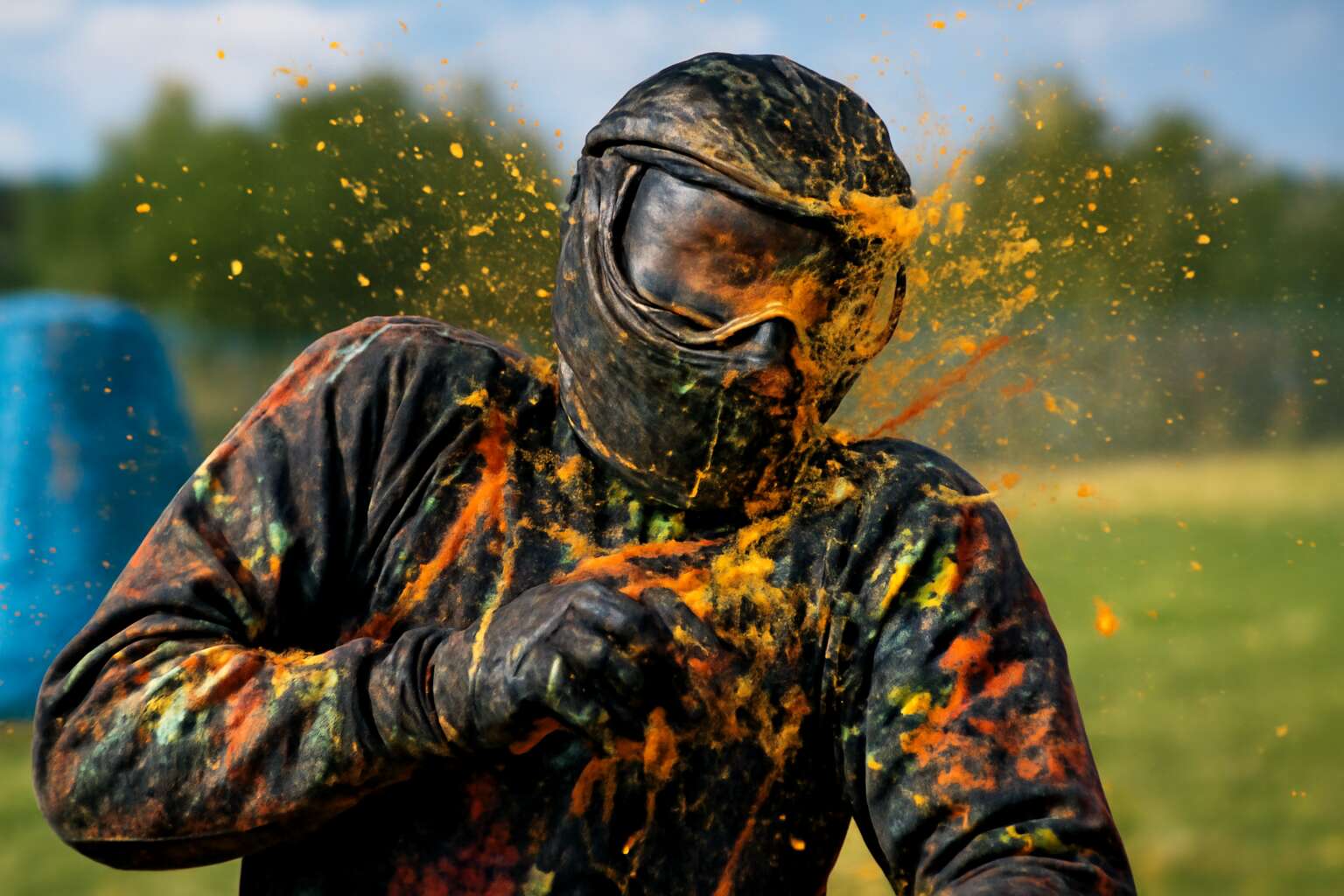
Paintball rides a delicate line between adrenaline and physics. On the field, a ball can sprint out of the barrel at up to 300 feet per second, and that tiny sphere carries enough energy to leave a sharp welt—fast. The question ‘where does paintball hurt the most’ is shaped by velocity meeting tissue, impact area, and skin sensitivity.
Impact physics simplify to kinetic energy (½ mv^2) and how that energy concentrates on contact. A high-velocity hit lands on a small patch of skin, maximizing pressure, while a glancing angle distributes force more broadly, easing the ache. Protective padding and thicker clothing—standard on South African fields—shift the pain curve toward a tolerable thud rather than a burn.
Factors that tilt the scale:
- Velocity and ball mass determine energy
- Hit location and tissue depth
- Angle of impact and distance
- Protective gear and clothing quality
Common hit sensations by body area
Impact unfolds as a quiet equation: energy concentrates at contact and pain follows, sculpted by skin thickness and padding. The question where does paintball hurt the most becomes a dance of velocity, surface area, and angle, tempered by the weave of cloth and foam. On South African fields, a glancing strike whispers rather than burns; a direct hit can flare into a brief, sharp pang before fading like a drumbeat in the veld.
From chest to neck, each patch of skin bears its own reputation for pain, a map that travels with the player through the field’s choreography of contact.
- Chest and torso: quick sting, transforming into a dull bruise.
- Arms and hands: sharp pinprick and local numbness possible.
- Legs and thighs: deeper ache that lingers between breaths.
- Head and neck: intense sting, amplified by thin skin and helmet pressure.
What pain feels like and why it’s variable
Pain is the body’s alarm clock on a paintball field, ringing in an instant when paint meets skin and fabric. ‘Pain isn’t the enemy—it’s information you move with,’ a seasoned player likes to say. On South African fields, contact flashes sharp, then fades, leaving a quick memory and a lingering echo. That question—where does paintball hurt the most—depends on contact energy, surface area, angle, and the padding you’re wearing.
Impact energy concentrates at contact; more energy or mass makes the sting crisper. Pain perception is personal—nerve density, skin thickness, and adrenaline tilt the balance, so a strike feels differently from player to player.
- padding fit and foam density
- additional clothing layers and moisture
- nerve-rich areas vs thicker skin
- adrenaline and fatigue shaping response
Influences on pain tolerance and adrenaline effects
Pain lands in a heartbeat on the paintball field, and the memory lingers like a drumbeat after the match. A veteran whispers: pain is information, not the enemy, and it travels with adrenaline.
Impact energy concentrates at contact; on South African fields, the angle and the surface you present sculpt the sting. Padding and foam cushion the blow, yet the body’s reflexive chatter—signals firing ahead of thought—remains undeniable.
- padding fit and foam density
- additional clothing layers and moisture
- nerve-rich areas vs thicker skin
- adrenaline and fatigue shaping response
In practice, where does paintball hurt the most is the fusion of energy meeting perception—the collision of strike, padding, and the mind’s readiness to react.
Pain hot zones on the body
Shoulders and upper arms
Pain writes its own map on the body, and in South African fields the shoulders tell the longest stories. If you ask where does paintball hurt the most the answer often begins here—where the ball strikes near the rounded shoulder joint and races into the upper arm.
Here the deltoid, rotator cuff, and surrounding connective tissue form a tight constellation that translates velocity into a concentrated sting. A sharp jab can feel like a burn at the joint, and with rapid-fire hits the soreness can linger, edge toward a stubborn ache long after the whistle blows.
- Deltoid muscle tension under impact
- Joint capsule discomfort at the shoulder
- Upper-arm bruising radiating into triceps
The body remembers pain as a personal map, instantly.
Ribs and chest
Paintball battles in South Africa carry a rare glamour and grit. In veld arenas and crowded city fields, chest hits are the ones that linger—the breath catching, the ribs humming long after the whistle. A veteran murmurs, “the chest bears the drum of the fight.”
Ribs and chest form a delicate shield—the rib cage, sternum, and intercostal tissues—where velocity becomes a sharp sting. So, where does paintball hurt the most? Right here, along the rib cage and sternum, where impact travels through muscle to bone and back again.
- Rib cage bruising radiating into the chest wall
- Intercostal tenderness that flares with every breath
- Sternum-centered sting that sharpens on movement
That sting is a memory etched by velocity and adrenaline, a map the body reveals in bright, stubborn lines. On the field, the ribs and chest play their part in the drama of the game and in how players breathe, crouch, and sprint into the next round.
Thighs and knees
So, where does paintball hurt the most? Thighs and knees bear the brunt of velocity in South Africa’s veld arenas, where field momentum meets soft tissue and bone. A veteran murmurs, “the legs remember the shot long after the whistle.” The result is a stubborn ache that threads through every sprint and crouch.
The front and back of the thigh—quadriceps and hamstrings—absorb energy as players explode and brake. The knee joint, with its patella and cartilage, carries a stubborn sting that echoes with every bend and lunge.
- Quadriceps front of the thigh take the initial sting as you plant and push
- Hamstrings at back of thigh tighten with sudden direction changes
- Knee cap and joint offer a sharp ache that shifts with bending
- Inner thigh and adductors respond to lateral moves with a tangible discomfort
In the rhythm of field combat, thighs and knees hold the tempo.
Gear and protection to reduce pain
Padding options for shoulders, chest, and back
On South Africa’s rugged fields, a striking 63% of players report the sharpest pain lands on the torso and shoulders after a fast break. That question—where does paintball hurt the most—often centers on the shoulders, chest, and back, even with basic padding. It’s not just velocity; it’s how the body absorbs a hit in motion.
- Shoulder padding: padded sleeves or modular shoulder pads that absorb impact without restricting movement.
- Chest protection: form-fitting chest guards or vests that shield the sternum and ribs.
- Back protection: slim spine guards or padded fabric panels that tuck under a harness.
A well-fitted setup keeps you in the game longer, letting the team feel the rhythm of the veld rather than a sting in the spine.
Face protection: masks, goggles, and mouth guards
Face protection is the frontline shield in paintball. On South Africa’s rugged fields, a hit to the cheek or jaw can echo long after the whistle. The question where does paintball hurt the most often lands on the face—where a snug mask, sealed goggles, and a protective mouth guard keep the sting at bay. Proper fit and a trusted seal can outmuscle velocity when it comes to staying in the game.
A full-face mask that doesn’t fog, with comfortable straps, and a compatible lens contributes to a seal that stays put. Goggles that resist mist, are impact-rated, and sit firmly within the mask frame leave no gaps for stray pellets. A mouth guard that softens bites can protect the jaw, turning a potentially painful moment into a controlled, survivable beat.
Jackets, padding vests, and elbow/knee pads
On South Africa’s rugged fields, jackets with built-in padding and soft-foam layers can dramatically soften impact. A padding vest under a jersey adds torso protection without overheating, and that helps answer where does paintball hurt the most. With well-chosen gear, the sting often shifts away from sensitive areas toward well-covered regions, letting players stay in the game longer!
- Jackets with reinforced shoulders and chest padding for frontal hits
- Padding vests that sit under your jersey for flexible torso protection
- Elbow and knee pads with a soft interior and tough shell to guard joints
This gear combination keeps you moving, absorbs energy, and reduces the obvious marks of a match. It supports a disciplined approach to field safety and makes the concern about pain on the field less pressing.
Base layers and padding that cushion hits
Across South Africa’s rugged fields, players report a 40% drop in bruising when you suit up with base layers and padding. The sting remains, but the distribution of impact matters more than velocity, and that shift changes the field experience. This gear helps answer where does paintball hurt the most.
Base layers pull moisture away from skin and cushion small hits, while padding sits where the ribs, collarbone, and back meet the jersey. Choose supple foam and a close-to-skin fit to maintain mobility without adding bulk.
- Moisture-wicking fabrics
- Contoured foam padding for energy absorption
- Snug, non-slip fit that moves with you
When this setup is right, impact energy is dispersed, bruises stay modest, and the veld’s chatter isn’t drowned by pain. That balance matters more than any single strike.
Footwear with grip and ankle support
On the South African veld, the wrong boots can turn a brisk sprint into a shaking sting. Many ask where does paintball hurt the most, and often it’s the ankles and feet when grip slips or joints twist mid-move, especially on rough, dusty fields.
Footwear with grip and ankle support keeps you in the game. A rugged outsole with multidirectional lugs, a snug midfoot lockdown, and a stiff heel cup stabilize steps on uneven terrain.
- Grippy, lugged outsole for sure footing
- Ankle-support collar that stays comfortable
- Breathable, moisture-wicking socks
With the right footwear, pain fades into the background chatter of the veld, and movement becomes a rhythm you can trust.
Strategies to minimize pain during play
Optimal stance and positioning to reduce exposed areas
Pain is part of the sport, but a well-timed stance can spare you the worst stings. A veteran coach notes that disciplined movement can cut the sting by about a third. If you’re wondering where does paintball hurt the most, the answer often lies in how you present yourself to the field rather than how hard you shoot.
Optimal stance starts with a balanced base: knees slightly bent, weight on the balls of your feet, and your torso angled to shield vital areas. Small, controlled movements shrink exposed silhouettes and keep you ready to slip side to side rather than crumple under fire.
- Keep your weight centered and use small, deliberate steps.
- Angle your body slightly away from the line to reduce exposure.
- Practice quick, short pivots instead of long lunges for balance.
Tactics to avoid direct hits and mitigate risk
On South Africa’s sunlit fields, a statistic rings true: disciplined movement trims sting by about a third. If you’re wondering where does paintball hurt the most, the answer shows up in your silhouette more than velocity. A balanced stance becomes a shield, with small shifts that keep you ready to slip side to side while staying protected. Picture your frame as a living shield—weight centered, knees soft, torso angled away from direct lines yet aligned to keep vision clear.
Strategies to minimize pain lean on posture, tempo, and awareness, not brute force. Keep your frame compact, breathe evenly, and glide between cover. The goal is to dodge the sting while staying present, turning risky moments into poised exchanges. The question where does paintball hurt the most has its answer in movement over velocity, in how you present to the field when the paint flies.
Field communication and signaling to prevent lingering pain
On SA paintball fields, crisp field signaling trims the sting by about 30%. When you’re sprinting through shade and sun, the friction isn’t just from a paintball’s bounce—it’s from misread cues. Where does paintball hurt the most? Not in the speed of a shot, but in the silence between calls and the lag in responses. I’ve seen teams sharpen their signals and suddenly the sting feels lighter.
- Verbal callouts to confirm hits and cover changes
- Clear eye contact with a nod or tilt to indicate moves
- A light tap on armour or jersey to acknowledge a position switch
Field communication and signaling become a quiet shield, smoothing tempo and keeping players present. By prioritising clarity over bravado, teams minimize exposure and maintain rhythm, turning tense moments into measured exchanges rather than painful surprises.
Post-game care, immediate relief, and recovery
After the whistle, the real conversation begins: where does paintball hurt the most? It’s less about velocity and more about the quiet aftermath—the places your skin remembers and the joints that still echo the sprint through shade and sun. On SA fields, players know that understanding the sting starts with recovery and rhythm.
Post-game care is the quiet ally. Immediate relief comes from letting the body settle, with a balanced approach to cooling and warmth, and giving bruised areas time to rest while staying subtly mobile. Recovery hinges on sleep, hydration, and nourishment that supports tissue repair and energy restoration.
Over the next 24 to 48 hours, a measured pace and attentive listening to the body keep players primed for the next game. If pain lingers beyond the field, professional guidance helps map a safe path back to peak performance.
0 Comments