
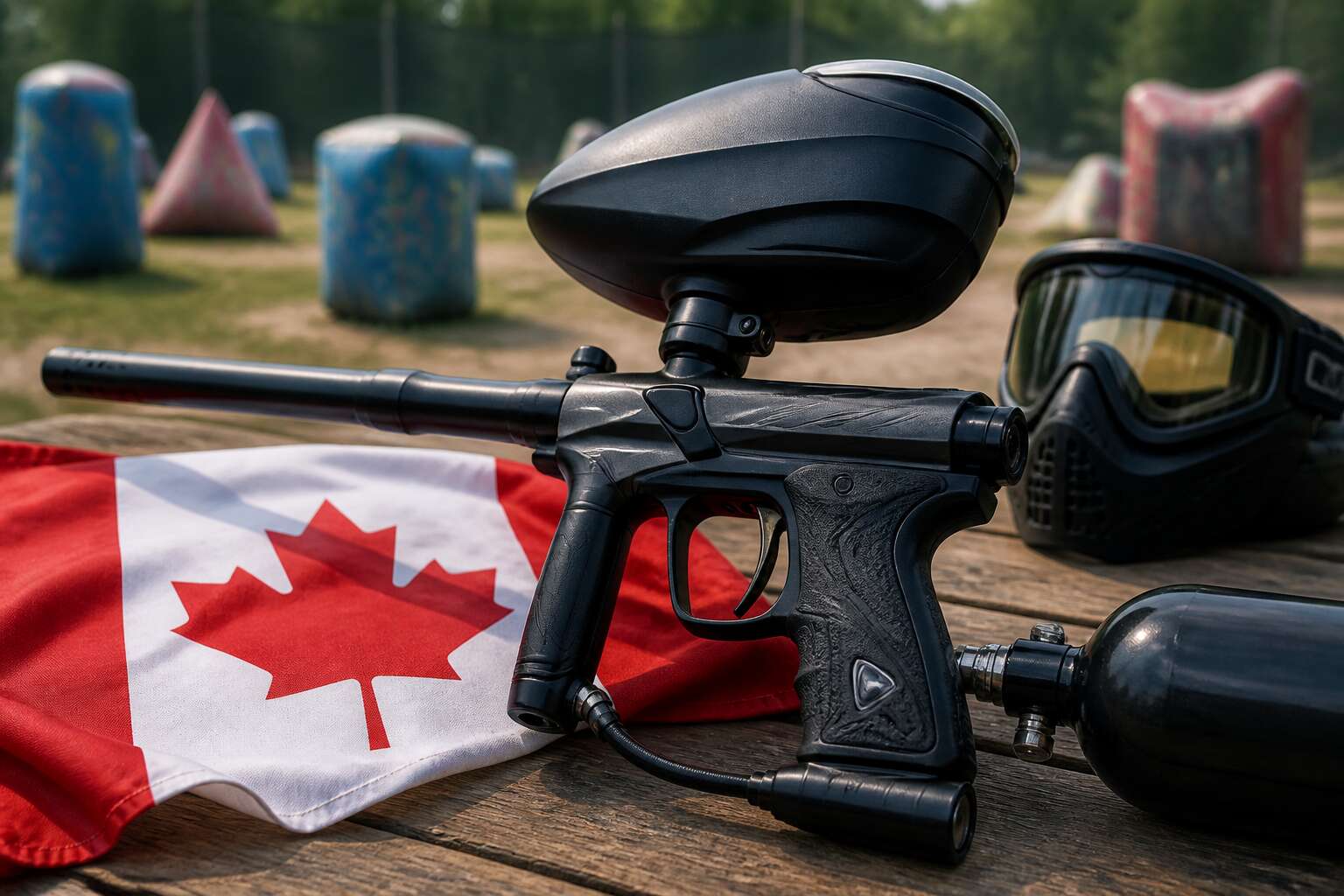
Understanding the Legal Classification of Paintball Guns in Canada
Firearms Act Exemptions for Paintball Markers
Canadian law draws a sharp line between paintball markers and conventional firearms. Under the Firearms Act, paintball guns are exempt from federal licensing and registration requirements. This exemption applies because these markers operate with compressed gas, not gunpowder, and lack the capacity to fire standard ammunition.
So, are paintball guns legal in canada? Yes, for most users. The question hinges on how the device is built and used. A stock paintball marker that meets safety standards stays outside the firearm licensing system. The exemption, however, carries conditions.
Canadian authorities evaluate several factors:
– muzzle velocity below 152.4 metres per second
– projectile size limited to standard paintballs
– no capability to chamber firearm cartridges
Modifications change everything. A marker that exceeds velocity limits or accepts real ammunition loses its exempt status. Police treat altered devices as firearms, which brings full criminal liability. South African players travelling with paintball gear should note that Canada Border Services Agency applies the same technical standards.
How Canadian Law Defines a Firearm vs. a Paintball Gun
Most people assume that a paintball gun’s classification hinges solely on its power source. In Canada, the legal definition is far more specific and focuses on the actual construction of the device. The law does not care that the projectile is a paintball; it cares about the mechanism that propels it. Police and courts determine the status of a marker by examining whether it meets the technical criteria for a firearm, which includes the ability to cause serious bodily harm or death.
Under the Criminal Code, the Royal Canadian Mounted Police (RCMP) assesses the gun’s design to see if it falls under the “replica” or “firearm” category. A standard paintball marker is not considered a firearm because it uses compressed air and is not designed to fire a “projectile” in the legal sense defined by the Firearms Act. Specifically, the definition excludes devices that meet these requirements:
- The projectile is retained in a safe manner during transport.
- The muzzle velocity is regulated by a fixed or adjustable pressure valve.
- The device is not easily convertible to fire live ammunition.
However, the line blurs quickly when alterations occur. If you modify the barrel length or the internal bolt to accept a .22 caliber round, the exemption vanishes immediately. The moment a paintball gun gains the capacity to chamber a standard cartridge, it becomes a prohibited or restricted firearm, subject to the full weight of Canadian gun control laws. This shift from recreational tool to regulated weapon is sudden and absolute, leaving no room for ambiguity. Therefore, the legality of your gear in Canada is not a question of intent, but a question of physical capability and design fidelity.
The Role of the RCMP in Classifying Paintball Equipment
Key Differences Between Airsoft, Paintball, and Real Firearms
More than 1.5 million Canadians step onto paintball fields each year, yet a lingering question shadows their enthusiasm: are paintball guns legal in Canada? The answer, clarified through years of regulatory refinement, is a definitive yes. These markers operate within a specific legal framework that distinguishes them from both firearms and airsoft replicas. The Crown’s decision rests on the technical capability of the equipment, not its appearance. A paintball gun simply lacks the muzzle energy required to cause serious bodily harm, which is the core metric for classification under the Criminal Code.
To own one legally, you must adhere to two straightforward conditions. Transporting a paintball marker requires it to be unloaded and securely stored in a case that is not readily visible from outside the vehicle. Additionally, you must be at least 18 years old to purchase one in most provinces, though some retailers impose a stricter age of 19.
The distinction becomes crystal clear when you compare muzzle velocities. A standard paintball marker fires at approximately 280 to 300 feet per second, while a low-powered airsoft gun can reach similar speeds with a fraction of the impact force. Real firearms, by contrast, propel projectiles at supersonic speeds exceeding 1,100 feet per second. This vast gulf in kinetic energy is why paintball guns remain unrestricted while actual firearms demand licenses, registration, and rigorous safety training. The law respects the intent of the sport, recognizing that recreational markers pose no greater threat than a well-thrown baseball. So, for those wondering about the legal landscape, rest assured that your paintball hobby sits comfortably within Canadian law, provided you respect the simple storage and transport rules that keep the sport accessible to all.
Federal Regulations Governing Paintball Gun Ownership
Possession Requirements Under the Criminal Code
Are paintball guns legal in canada? Under the Criminal Code, paintball markers do not qualify as firearms. This classification exempts them from federal registration and licensing requirements. Ownership rests on general principles of lawful possession. The Code does not mandate a permit for acquiring a marker, but it requires owners to avoid using their equipment as weapons.
Possession requirements under federal law hinge on intent and circumstances. You cannot lawfully possess a paintball gun while intending to endanger life or property. Carrying one in public without a lawful excuse can trigger penalties. The Code also forbids brandishing a marker during a criminal act.
- No federal ownership permit needed for paintball markers
- Unlawful possession occurs when intent is harmful
- Public carry requires a valid purpose, such as transport to a field
Are paintball guns legal in canada? At the federal level, yes, provided you keep your marker within these boundaries. The Criminal Code scrutinizes your purpose, not your purchase.
Transportation Rules for Paintball Markers in Public
When you ask are paintball guns legal in canada, the answer extends beyond possession. Federal regulations for ownership focus on safe storage, while transportation rules govern every trip to the field. You cannot treat a marker like a toy in public view.
Carrying a paintball gun openly invites scrutiny. The law requires a reasonable purpose, such as travel to a sanctioned game or repair shop. A marker left visible in a vehicle can alarm citizens and draw police attention. I recommend a padded case, placed in the trunk, with barrels plugged or removed.
- Keep markers unloaded during transport
- Store CO2 or compressed air tanks separately
- Never stop for casual errands while carrying
Are paintball guns legal in canada? Yes, but only when public handling follows these federal rules. Even a brief walk to a car can become a legal issue if someone misinterprets your intent. The law values discretion over display.
Storage and Handling Guidelines for Licensed Players
Storage rules for paintball markers hinge on a simple principle: separation. Federal guidelines do not require a locked safe, but they demand that guns remain inaccessible during storage. This translates into specific handling routines for licensed players.
Here is what a compliant setup looks like:
– Store markers unloaded with the barrel cover secured
– Keep propellant tanks detached and stored separately
– Place markers in a locked cabinet or dedicated case
Are paintball guns legal in canada? Yes, for licensed players, but the privilege carries storage duties. The phrase surfaces in casual debate, yet the real question is whether owners respect these quiet obligations. Compliance eliminates ambiguity, both for the player and for law enforcement. A marker left assembled on a shelf invites scrutiny. A marker stored in pieces, sealed and locked, invites none. That distinction defines responsible ownership under federal regulations.
Restricted Areas and Discharging Paintball Guns Near Public Spaces
Are paintball guns legal in Canada? Yes, but the federal rules are only half the story.
While the Criminal Code and the Firearms Act treat paintball markers as exempt from standard licensing requirements, your local municipality often writes the harsher laws. When you step onto public property, the conversation shifts entirely. Discharging a paintball marker in a city park, on a schoolyard, or near a road typically violates municipal bylaws regarding weapons and projectiles, even if you possess the equipment legally.
To avoid trouble, you must respect designated boundaries. Most urban centres impose strict no-discharge zones that extend well beyond the obvious “No Shooting” signs. A general rule of thumb is to stay at least 100 metres away from any roadway, dwelling, or place where people gather. Furthermore, transport rules demand your marker remain unloaded and cased while travelling to a sanctioned field. If you fire it anywhere outside a designated paintball facility or private land with the owner’s permission, you invite fines or confiscation. The law gives you the right to play, but it never gives you the right to surprise the public.
Common restrictions to remember:
– Never fire across a roadway or within 50 metres of a thoroughfare.
– Do not shoot on Crown land unless local regulations explicitly permit it.
– Always keep the trigger lock engaged during transport to avoid a careless use charge.
Ultimately, the answer to “are paintball guns legal in canada” changes depending on your province and your proximity to populated areas. Nationally, you are clear. Locally, you must verify the specific bylaws where you intend to play. A quick phone call to your municipal bylaw office before you head out prevents a legal headache later. The equipment is legal, but the behaviour must always be prudent.
Penalties for Using Paintball Guns in Unsafe or Illegal Manners
The paradox of paintball in Canada is that ownership and usage are governed by entirely different rules. While federal law provides a clear path to legal possession, the moment you pull the trigger outside of sanctioned spaces, you enter a complexity of provincial and municipal regulations. This is especially true when you consider the Criminal Code sections on weapons, which can apply if a marker is misused in a public space. So, when people ask, “are paintball guns legal in canada,” the answer is a layered yes, with specific conditions around safety and storage that are non-negotiable.
Federal penalties for careless use are serious, with fines that can escalate quickly if an incident involves a vehicle or a crowded area. The law also distinguishes between accidental discharge and intentional intimidation, with the latter carrying potential jail time. For players, the key is to remember that your marker, while a recreational tool, is treated as a firearm under specific legal contexts.
When transporting your gear, you must ensure it is fully sealed and stored in a case that is not easily accessible. Ammunition must be kept separate from the marker itself. These precautions are not just for compliance; they are the standard that separates a lawful enthusiast from someone facing a weapons charge.
The legal consequences are clear:
– First-time municipal infractions often result in fines between $200 and $500.
– Provincial offenses may lead to mandatory safety courses.
– Federal weapons charges can create a permanent criminal record.
Ultimately, the answer to “are paintball guns legal in canada” remains affirmative for responsible owners. The law is strict, but it is navigable. By understanding that the marker is a piece of sports equipment with strict transport protocols, you can enjoy the game without crossing legal boundaries. The framework exists to ensure that these powerful tools are always used with the seriousness they demand.
Provincial and Territorial Laws Impacting Paintball Use
Alberta and British Columbia: Local Bylaws and Field Permits
Ask anyone east of the Rockies and they will tell you Canadian gun laws are a monolith. Yet the reality of the geophysical and cultural patchwork that is this nation reveals a different story entirely. While federal statutes provide the baseline, the provinces have the legislative latitude to complicate the answer to the question are paintball guns legal in canada with municipal quirks that baffle even seasoned players.
Alberta, for instance, is a land of wide-open spaces and even wider interpretations of personal liberty. However, that frontier spirit respects the fence line. Edmonton and Calgary don’t ban the markers themselves, but they have strict bylaws regarding the discharge of any projectile within city limits. You will not be shooting pinecones at a park bench without a permit, let alone a paintball. The key is often the field permit. If you locate a dedicated commercial operation, the municipality has likely already zoned it for such activity蓬莱. But the moment you step onto crown land or a buddy’s acreage, you enter a grey zone where a local reeve might have passed a specific bylaw against “unsafe projectiles” that no one has challenged in court. It is a bureaucratic lottery.
British Columbia takes a different tack, often leaning on environmental and noise regulations to govern play. A private field in the Fraser Valley might be perfectly legal, but an impromptu game in a regional district park will earn you a fine that makes the price of your gear look like pocket change. The provincial focus is on containmentcheddar.
Here is the breakdown of what commonly flies and what flops in BC:
– Discharge distances from roadways and dwellings are non-negotiable.
– Many municipalities require a business license for any organized game, even on private land.
– Noise bylaws often dictate times of play, usually silencing markers after 8 PM.
The true test comes with urban sprawl. Vancouver’s surrounding municipalities, such as Surrey and Abbotsford, have rigorous permitting processes that treat paintball fields more like construction sites than sports facilities, requiring environmental assessments and traffic studies. In contrast, rural communities in the interior often welcome the tourism revenue, making the process surprisingly simple. The lesson here is that local approval is the lynchpin to legality. Federal law says you can own it; provincial law says you can shoot it; but the municipality decides if you can do it without a visit from the bylaw officer who has nothing better to do than measure your decibel output. Alberta’s famous “Wild Rose” attitude might make ownership easy, but a single complaint in a quiet subdivision is enough to turn your weekend hobby into a legal headache. Check the local registry before you fill your hopper, or you might find yourself explaining the nuances of are paintball guns legal in canada to a skeptical judge in a town that has never seen a chronograph.
Ontario and Quebec: Minimum Age and Consent Regulations
Ontario and Quebec treat the minimum age for paintball with a blend of parental oversight and plain paperwork. In Ontario, players must generally be 18 to sign waivers, though many fields allow teens aged 14 and up with a parent or guardian present. Quebec takes a slightly more bureaucratic route, requiring written consent for minors and mandating that venues keep these documents on file.
A quick look at the patchwork of rules shows how the provinces differ:
– Ontario often relies on verbal parental approval at the counter, which is casual and quick.
– Quebec demands a signed authorization form, which feels more like a legal transaction.
When you weigh the question of whether are paintball guns legal in canada, the answer shifts with each border you cross. Consent rules, not federal law, create the real friction for younger players. Quebec’s Civil Code adds extra rigor, so a missed signature can end a birthday outing before the first game starts. Knowing where you stand, and which forms you need, makes the experience far smoother. Both provinces keep the activity legal, but their age and consent rules are distinct enough to catch first-timers off guard.
Maritime Provinces: Specific Restrictions on Paintball Activities
Imagine a Saturday morning in Johannesburg, where the highveld sun burns off the mist. You are planning a weekend skirmish, and the question of legality in another country might seem distant. Yet, for anyone tracking international regulations, the query remains persistent: are paintball guns legal in canada? The answer is a definitive yes, but the path to that answer is paved with nuance that surprises many first-time visitors from the Southern Hemisphere.
The core of Canadian law treats paintball markers as firearms only in specific, narrow contexts. The Criminal Code sets the federal floor, but the real texture of the law is found in local ordinances. Unlike the stricter regimes in some European nations, Canada permits the ownership of these markers without a Possession and Acquisition Licence (PAL) in most provinces, as long as the marker is not a replica of a restricted or prohibited weapon. This distinction is crucial. A marker designed to look like a military assault rifle can cross into illegal territory, while a standard sports model remains perfectly lawful.
For a South African player accustomed to the Firearms Control Act, the Canadian approach feels remarkably pragmatic. The legal logic hinges on the device’s velocity and purpose, rather than its mechanical action. If a marker exceeds 500 feet per second, it begins to attract the attention of law enforcement as a viable weapon. Below that threshold, it is a recreational tool. This technical detail directly answers are paintball guns legal in canada for most enthusiasts, as standard field settings are safely under this limit.
However, the federal answer is only half the story. The true complexity emerges when you cross provincial lines. In urban centres like Toronto or Vancouver, municipal bylaws often restrict discharge to designated fields. You cannot simply walk to the park with your gear. This contrasts sharply with rural areas, where private property use is generally permitted, provided you maintain a reasonable distance from roadways and residences. The enforcement of these rules is consistent, so understanding your specific locale is non-negotiable.
The visual distinction also matters. A paintball marker that is brilliantly coloured and clearly a sporting device will rarely draw a second glance. Conversely, a marker with a tactical stock and a long barrel, even if legally purchased, can trigger a public disturbance call simply because it resembles a rifle. The police response is based on the perception of the public, not the technical legality of the device. This is why the question of are paintball guns legal in canada often has a follow-up inquiry about appearance, because practical legality is tied to perception.
The importation process is another layer. If you are shipping gear from South Africa, you must ensure the marker is not classified as a prohibited device. The Canadian Border Services Agency (CBSA) evaluates each import. Markers that look like exact replicas of modern military firearms are turned away. Those that look like standard sporting equipment pass through without issue. This border scrutiny is the most common point of failure for international players.
Transportation rules are just as important as possession. When you are driving to a field, your marker must be unloaded and stored in a case that is not readily accessible to the driver or passengers. This mirrors the safe transport of any firearm, even though a PAL is not required. Failing to follow this transport protocol can lead to charges under the Criminal Code, even if your possession was entirely lawful. The officer does not care about the sport; they care about the accessibility of a projectile device.
So, when you ask whether are paintball guns legal in canada, remember that the answer is a layered yes. It is not a uniform allowance, but a conditional permission. For the South African player, the key takeaway is preparation. The law protects the sport, but it demands respect for the public’s perception and the letter of the local statute. The marker is legal, but the conduct around it is what keeps it that way.
Municipal Bylaws That Override Provincial Rules
Are paintball guns legal in Canada? Yes, they are. But that simple answer carries more weight than most people expect, especially for players coming from South Africa where firearm regulations follow a different path. Understanding the legal framework before you book a flight or ship your gear can save you from a very awkward conversation at customs.
Canadian federal law makes a clear distinction between firearms and paintball markers. The Criminal Code does not classify paintball guns as firearms. This single fact underpins the entire legal status of the sport. However, that exemption comes with conditions. A paintball marker cannot resemble a restricted or prohibited firearm. Police take a dim view of markers designed to look like AK-47s or fully automatic rifles. If your marker looks like a military weapon, the legal comfort disappears quickly.
The federal government sets the baseline, but provinces add their own rules. Alberta and British Columbia treat paintball markers as regulated sports equipment. You do not need a license to own one. But you do need to follow local discharge laws. Most municipalities require you to play at a licensed paintball field. Playing on private land is allowed, but only if the land is large enough and far enough from public roads. Urban areas almost always prohibit discharge of any projectile device, including paintball markers.
Ontario and Quebec follow a similar pattern with one additional layer. Quebec requires players to be at least 16 years old to purchase a paintball marker. Ontario has no such provincial age limit, but individual fields can set their own rules. The Maritimes, including Nova Scotia and New Brunswick, mirror the western provinces. No license is required, but discharge is restricted to designated fields or private property with proper distance from roadways.
Importing a paintball marker into Canada demands attention. The Canada Border Services Agency (CBSA) follows the Criminal Code definitions. Ordinary paintball markers pass through without issue. Markers that look like real firearms, even if they are exact replicas, can be seized. This is not a rare occurrence. Travellers from South Africa often discover that their markers, designed for the local market with military styling, are not admissible. If you are bringing gear, bring documentation. Show that the marker meets the velocity limits and does not resemble a prohibited firearm.
When transporting your marker within Canada, treat it like you would a firearm in South Africa. Keep it unloaded. Store it in a case that does not draw attention. Never leave it visible on a vehicle seat. Police officers, especially in rural areas, may not immediately recognize a paintball marker as legal equipment. The wise move is to be cooperative and ready to explain the sport. Explain the velocity limits and the non-lethal nature of the ammunition. Most officers accept this, but the initial interaction is smoother when your marker is packed away.
Perception matters more than you might think. Even in a country where paintball guns are legal, public reaction can shape your experience. A colourful, clearly recreational marker draws no attention. A black, tactical-looking marker with a long barrel can trigger a call to the police. The police response is not about legality. It is about public safety and the reasonable concern of a passerby. The outcome can be a simple conversation or a more serious encounter depending on your behaviour and the context.
For the South African player, the practical takeaway is this. Canadian law is permissive but cautious. The five percent of cases where problems arise involve replicas or careless storage. If you stay within the boundaries, you can enjoy the sport across most of the country. The system is not designed to catch you out. It is designed to keep the sport safe and self-regulated.
Territorial Considerations for the Yukon, Northwest Territories, and Nunavut
Like the vast landscapes themselves, the territories operate on a philosophy of simplicity. The Yukon, Northwest Territories, and Nunavut do not have the dense municipal structures found in southern provinces. This means the federal baseline for paintball markers holds sway. When you ask if are paintball guns legal in canada, the answer in these regions is a straightforward yes, but the practical realities of the north shape the experience. There are no provincial licensing boards or specific territorial acts governing the markers. You are bound by the Criminal Code and general public safety laws.
The true challenge is logistical. Consider the sheer distances. A short drive to a field in Ontario is a multi-day expedition here. While the law permits private land use, the private land itself is often vast and remote. You will need to be entirely self-sufficient.
– Planning for extreme weather conditions that can turn a game into a survival exercise.
– Ensuring your marker’s seals and CO2 systems handle rapid temperature swings.
– Respecting wildlife corridors, as startling a bear with paint is not a legal issue, but a poor life choice.
Nunavut, with its fly-in communities, presents the most unique scenario. Shipping a paintball marker there is an exercise in patience. Local RCMP detachments are familiar with the federal exemptions, but the community perception of tactical gear can be less tolerant. A standard, brightly coloured marker is your best companion in the north. The remoteness itself enforces the spirit of the law. The environment demands respect, and the rules follow suit. For the South African traveller, this is where the idea of unstructured play truly lives, but it requires a level of preparation that most weekend players never consider. The law is permissive; the land is not.
Age, Licensing, and Permit Requirements for Paintball Players
Minimum Age Limits for Buying and Playing Paintball
It is a question that echoes across bunkers and barrels alike: are paintball guns legal in canada? The answer, thankfully, is yes, but the path to the field is paved with specific regulations rather than a simple yes. Unlike firearms, a Possession and Acquisition License is not required to own a marker. However, this does not mean the hobby exists in a legal vacuum, as the rules shift depending on your age and your postal code.
The most significant divide lies in the age of the player. While there is no federal statute setting a minimum age for ownership, the Criminal Code classifies most paintball markers as non-firearms when operated below a specific velocity. This classification, however, leaves the door open for provincial and municipal oversight.
If you are looking to purchase or play, here is the general breakdown across the provinces:
– In Alberta, Manitoba, and Saskatchewan, the minimum age to buy is typically 18, though parental consent can lower the playing age.
– Ontario and Quebec generally set the purchase age at 18, with many fields allowing players as young as 16 with a guardian present.
– The Maritime provinces often follow a similar 18-year-old purchasing rule, but some local fields enforce a strict 12-and-up policy for participation with proper supervision.
That being said, the minimum age for playing is often far lower than the age for purchasing, which creates a confusing dynamic for parents. Many commercial fields will rent equipment to minors, but the liability waivers must be signed by a parent or legal guardian. It is a system that places the onus on the adult, not the state.
Remember, while the federal government does not require a license, local bylaws can. For example, some municipalities in British Columbia treat paintball markers as weapons under city ordinances, demanding a permit for use even on private land. So, while the overarching answer to are paintball guns legal in canada is positive, you must always check the local rules before you load up. Ignorance of a municipal bylaw will not protect you from a fine, even if the gear is stored safely at home.
Parental Consent and Supervision for Minor Players
Licensing for players rarely involves federal paperwork. The question of are paintball guns legal in canada gets answered at the field office, not the firearms registry. Field operators hold the permits, while players verify their identity and sign in before each session.
Parental consent carries the heaviest weight for minors. In my years covering paintball regulations, I have seen many guardians assume a signature covers the whole season. It does not. Most fields require the parent to remain on site, and several provinces set the supervised playing age at 12. Attendance at the safety briefing is often mandatory for both child and guardian.
Municipal permits add another layer. Even with parental approval, a town can require a permit for paintball on private property. The broad legal answer remains yes, but the fine print lives in local bylaws and signed forms.
Do You Need a Possession and Acquisition Licence (PAL)?
The question of whether are paintball guns legal in canada often trips up newcomers, but the answer is a straightforward yes for most players. The federal government does not classify standard paintball markers as firearms under the Criminal Code, provided they meet specific velocity limits. This classification means you do not need a Possession and Acquisition Licence (PAL) to own one. However, the real regulatory weight shifts to provincial and municipal rules, which is where the complexity begins.
Age requirements are the first major hurdle. While federal law is silent on a minimum age for purchase, most provinces enforce a strict threshold of 18 years old to buy a marker. For players under 18, the rules tighten considerably. In many regions, a minor cannot even handle a paintball gun without direct, on-site supervision from a parent or legal guardian. This is not a casual suggestion; it is a hard legal boundary that operators must verify before allowing participation.
– Age of majority (18+): Can purchase and operate markers without supervision.
– Minors (under 18): Require a parent or guardian present at the field.
– Parental consent forms: Usually mandatory for every session, not just annually.
Even with age requirements satisfied, you must secure a valid permit for the venue itself. Municipalities often issue specific business licenses for paintball facilities, and these permits dictate everything from netting height to insurance coverage. If you are playing on private land, you are not exempt. Several provinces require a special discharge permit for recreational shooting on private property, which involves a site inspection to ensure safe backstops. This layered system means the simple answer to whether are paintball guns legal in canada depends heavily on where you stand geographically and how old you are.
Commercial Field Licenses vs. Private Land Use
The answer to the question are paintball guns legal in canada often depends on where you play. Commercial fields must secure municipal business permits that regulate netting, insurance, and emergency protocols. These licenses are renewed annually and subject to inspection. Private land is different. Provincial discharge permits may be required, and site inspections confirm safe backstops. Age rules still apply. Players under 18 need a guardian present even on private property. Licensing for the marker itself is unnecessary, but the venue permit is non negotiable. Consider these points:
- Commercial field licenses require proof of insurance.
- Private land permits demand backstop inspection.
- Minors need supervision regardless of venue.
So are paintball guns legal in canada? Yes, but only within these layered rules.
Insurance and Waiver Requirements for Organized Events
Most players never think about waivers until they are handed a clipboard at the check-in desk. That form is your primary legal safeguard. For organized events, venue operators require signed waivers from every participant before a single shot is fired. These documents acknowledge the inherent risks of the sport and release the field from liability.
Insurance is the second layer. Commercial fields carry general liability policies, but players should verify their own coverage. Some personal health plans exclude paintball injuries. For minors, the waiver must be countersigned by a parent or legal guardian. Event waivers typically cover:
- Assumption of risk for welts, bruises, and eye injuries
- Permission to administer emergency medical treatment
- Release of the venue from negligence claims
Age rules vary by province. Most fields enforce a minimum of 12 years, though some require players under 16 to have a guardian present. Licensing is not required for the marker itself, but venue permits are mandatory. So are paintball guns legal in canada? Yes, when you play at a licensed field with proper waivers.
Penalties for Unlicensed or Underage Play
Verification of age, a valid license, and an operating permit are the foundation. Without all three, the game stops. Every province imposes an age floor, and these shift between 12 and 16 years old. If you are caught underage, or without the proper credentials, the field manager will confiscate your equipment for the day and could file a complaint with local law enforcement. The consequences are legal, not personal. Specifically, penalties for an unlicensed older player or an underage participant can include a court appearance. The usual process involves:
– A hefty fine under provincial laws.
– A potential criminal charge for interfering with a venue’s license.
If you are asking if are paintball guns legal in canada, the answer is yes, but failure to comply with age and permit rules will end your day quickly.
Importing, Buying, and Selling Paintball Guns Across Canada
Cross-Border Restrictions When Importing Paintball Markers
The question of whether are paintball guns legal in canada is one that sparks considerable curiosity, especially for players looking to cross borders or purchase new gear. The short answer is yes, they are legal, but the path to owning one is paved with specific federal regulations that differ sharply from the rules in the United States or Europe.
When it comes to importing a marker, the Canada Border Services Agency (CBSA) treats paintball guns as “replica firearms” unless they meet a specific threshold. To be admissible, the marker must have a muzzle velocity exceeding 366 feet per second (110 meters per second) and a muzzle energy greater than 5.7 joules. If your marker falls below this, it is classified as a replica, which is prohibited. You cannot bring it into the country, and attempting to do so will result in confiscation and potential fines.
Buying a paintball gun within Canada is a more straightforward process, but it still requires diligence. You do not need a Possession and Acquisition Licence (PAL) for a standard paintball marker, as they are legally classified as “non-restricted firearms” but exempt from licensing. However, you must be 18 years of age or older to purchase one. Sellers will often require proof of age, and you should always keep your receipt and the original packaging to prove the marker’s velocity specifications if you are ever questioned by authorities.
For those interested in selling or transferring a marker, the rules are about documentation and safety. You are legally responsible for ensuring the buyer is of legal age. While there is no federal registry for paintball markers, a private seller should still create a bill of sale that includes the serial number, the buyer’s information, and the marker’s velocity rating. This protects you from liability if the gun is later used in an unsafe manner.
Here are the key points to remember for any transaction, whether you are buying or selling across provincial lines:
– Velocity requirements: Ensure the marker shoots above 366 fps to avoid replica classification.
– Age verification: The buyer must be 18 or older and provide proper identification.
– Transportation rules: When transporting a marker, it must be unloaded and stored in a case that is not easily accessible.
– Provincial variances: Some municipalities have stricter local bylaws, so always check the local rules before traveling with your gear.
The sale of markers is generally unrestricted, but you cannot sell a marker that has been modified to shoot below the legal threshold. That alteration turns it into a prohibited replica. A dealer or private owner should be wary of any modifications that decrease the power output, as these are illegal to possess, let alone sell. The penalties for selling a prohibited device can include significant fines and a criminal record.
Ultimately, the regulations surrounding are paintball guns legal in canada exist to distinguish between sporting equipment and potential weapons. By adhering to the velocity standards and purchasing through reputable channels, you can enjoy the sport fully while remaining within the law. Always verify the specific requirements with your provincial wildlife or public safety office before making a purchase, especially if you live near a border or plan to travel with your equipment.
Customs and Border Services Agency (CBSA) Rules for Paintball Equipment
Are paintball guns legal in Canada? Yes, they are, but with specific conditions. The Canada Border Services Agency classifies them as replica firearms unless they exceed a muzzle velocity of 366 feet per second and energy of 5.7 joules. Markers below this threshold are prohibited for import, and attempting to bring them in can result in confiscation and fines.
For domestic purchase, no licence is required for standard markers. However, you must be 18 or older. Sellers should keep a bill of sale with the serial number. Transportation requires the marker to be unloaded and cased. Key requirements include:
- Minimum age of 18
- Muzzle velocity above 366 fps
- Unloaded and cased during transport
Always check provincial and municipal bylaws before travel. This is especially relevant for South African players researching Canadian rules, as local regulations can vary. Penalties for non-compliance range from fines to criminal charges.
Buying from Canadian Retailers vs. International Online Stores
So, you are looking to import a marker from abroad? The price tags on Canadian store shelves can feel steep, and the allure of a bargain from a US or European retailer is tempting. But before you hit that “checkout” button, you need to understand the federal cage you are potentially stepping into. We have already covered the core question of are paintball guns legal in canada, and the answer remains a firm yes, but the journey through customs is a separate beast entirely.
Let’s be honest: few activities feel more rewarding than unboxing a brand-new marker ordered from overseas. However, the Canada Border Services Agency (CBSA) does not share your excitement. They operate on strict technicalities. If your newly purchased marker fails to meet the specific velocity and joule thresholds we outlined earlier, it will be seized at the border. You will not receive a refund from the seller, and you will likely face a hefty fine to even have the item destroyed or shipped back. It is a gamble with high stakes, and the house always wins.
When you weigh your options, the differences become stark. Buying domestically from a Canadian retailer offers immediate peace of mind; the marker has already cleared federal scrutiny, and the retailer has handled the legal compliance for you. International online stores, however, place that burden squarely on your shoulders. You are the importer of record, and ignorance of the law will not soften the penalty.
To navigate this safely, consider these non-negotiable steps before you purchase from a foreign vendor:
1. Ask the seller to provide a written statement confirming the marker’s muzzle velocity is above 366 fps and the energy exceeds 5.7 joules.
2. Require them to declare the item accurately on the customs forms as a “Paintball Marker,” not a “Recreational Device” or a vague “Sporting Good.”
3. Keep every piece of correspondence and the original invoice, as you will need this paper trail to prove compliance if your package gets flagged for inspection.
The rigmarole is significant, and it is why many veterans stick to local pro shops despite the higher markup. We are not saying importing is impossible; we are saying it is a professional-grade headache. The next time you wonder are paintball guns legal in canada regarding a specific overseas model, remember that legality at the border is determined by hard numbers, not sentiment. If you lack the patience for customs bureaucracy, the domestic market is your sanctuary. If you choose to roll the dice, ensure your documentation is bulletproof.
Resale Regulations and Transferring Ownership
Safety Standards and Compliance for Paintball Markers
Velocity Limits and Chronograph Testing Requirements
In Canada, the legality of paintball markers hinges on their compliance with safety standards. The key metric is muzzle velocity. Canadian regulations and industry standards cap paintball markers at 280 feet per second (fps), a threshold designed to prevent serious injury. This limit ensures that the impact force remains within a safe range for recreational use, distinguishing them from firearms that are subject to the Firearms Act. For anyone wondering, are paintball guns legal in Canada, the answer is yes, provided they adhere to these specific performance parameters.
To verify compliance, players and field operators must use a chronograph, a device that measures the speed of a paintball as it leaves the barrel. This tool is not optional; it is the standard for ensuring safety and consistency. Chronograph testing is typically performed at the start of a game day and at intervals throughout the day, as temperature and CO2 pressure can affect velocity. Field marshals conduct these tests to certify that every marker on the premises meets the legal threshold width.
– A standard safety limit is often set at 280 fps, but many fields impose a stricter cap of 260 fps for rental equipment.
– A variance of plus or minus 10 percent is usually tolerated to account for environmental conditions.
– Markers exceeding the limit are immediately pulled from play and cannot be used until adjusted and re-tested.
The emphasis on velocity limits is not bureaucratic red tape. It is a practical measure that preserves the sport. When players consistently adhere to these standards, the risk of welts turning into wounds decreases dramatically shit. This compliance is what keeps the answer to are paintball guns legal in canada firmly in the affirmative, allowing organized play to continue without unnecessary government intervention. The process of chronographing is a shared ritual that gives players confidence in the equipment they face across the field.
Mandatory Safety Gear and Barrel Blocking Devices
Nothing screams “responsible hobby” like a sock in your gun barrel. Yet that is precisely the sight you will encounter at any sanctioned paintball venue across Canada. While the question of are paintball guns legal in canada is settled by velocity caps, the practical enforcement lies in mandatory safety gear and barrel blocking devices. You cannot simply stroll off the field with a loaded marker; that is how permits get revoked.
Barrel blocking devices, often called barrel socks or plugs, are non-negotiable. They physically prevent a paintball from exiting the marker when it is not in active play. The rules break down into a few critical components:
– Barrel blocking devices must be inserted whenever the marker is not on the field.
– Full-face masks with thermal lenses are the only acceptable eye protection; shop goggles are not.
– Trigger locks are required for transport and storage in most provinces.
The logic is simple. A paintball marker that cannot shoot is legally inert. A marker with a barrel sock and a mask mandate is a sports instrument. Failure to comply with these gear standards can instantly flip your legal status from recreational user to someone handling a weapon improperly, which drags the entire question of are paintball guns legal in canada into murky territory. The masks protect your vision, but the barrel sock protects your legal standing. Both are mandatory, and both are checked rigorously at field entry. This gear protocol is not a suggestion; it is the difference between a day of sport and a criminal charge.
FPS (Feet per Second) and Joule Limits Under Canadian Standards
Canada’s national standard caps paintball markers at 280 feet per second, which translates to roughly 14.4 joules with a standard .68 caliber paintball. This velocity limit is measured using a chronograph, a device that every licensed field must have on hand. You will see it at registration, before each game, and randomly during play.
The joule rating matters because it defines the marker’s potential for harm. At 280 FPS, a paintball fractures on impact rather than penetrating. That is the legal line. Exceeding it transforms your sports equipment into something the Criminal Code treats differently.
Most provinces set their limits between 270 and 300 FPS, but the RCMP uses 280 FPS as the federal benchmark for classification. If your marker shoots hotter than that, the answer to are paintball guns legal in canada shifts dramatically. It no longer qualifies for the paintball exemption under the Firearms Act.
Compliance with Canadian Standards Association (CSA) Guidelines
Compliance with Canadian Standards Association guidelines is the baseline for every marker sold through licensed Canadian retailers. The CSA evaluates more than muzzle energy; it checks trigger guard geometry, shell seam integrity, and the safety catch under repeated use. A certified marker carries a marking proving its survival.
- Trigger guard impact resistance
- Safety catch durability over thousands of cycles
- Receiver integrity on impact
For anyone asking are paintball guns legal in canada, this certification sits at the centre of the answer. An uncertified marker bypasses every safeguard that makes the sport defensible in court. South African imports lacking CSA or equivalent certification carry that same risk.
Ensuring Your Marker is Legal After Modifications
For anyone wondering if paintball markers fall into a legal grey zone, the short answer is no. Under federal law, are paintball guns legal in Canada? Yes, they are, provided they are used responsibly. The Criminal Code does not classify them as firearms. This is because their muzzle velocity is below the threshold that would trigger firearm regulations. As a result, you do not need a Possession and Acquisition Licence (PAL) to own one.
However, the absence of a license does not mean an absence of rules. The law treats a marker like any other ordinary object that could be used as a weapon. This means carrying one in public without a proper case or trigger lock can lead to charges for carrying a concealed weapon or possession of a weapon for a dangerous purpose. Transportation requires a secure bag, and the marker must be unloaded.
While federal law is permissive, provincial and municipal rules often add layers. Some cities have bylaws restricting where you can discharge a marker. Private property is generally acceptable, but discharging one on crown land or near residential areas can attract fines. Always check local regulations first.
Ultimately, compliance is straightforward. Keep your marker stored, transported safely, and used only at sanctioned fields or on private land with permission. Following these steps ensures that your hobby remains both legal and safe.
0 Comments