
Paintball Safety Overview
Common paintball injuries and their causes
Paintball thrills the senses, a pulse-pounding duel of speed and strategy. In South Africa, fields crackle with laughter and the sting of a well-placed hit. Can paintball guns kill you? It’s a question that narrows to accountability—gear integrity, rules, and timing under pressure.
A safety overview reveals the framework behind every game: certified masks, regulated markers, and trained staff who monitor velocity and proximity. The risk is real, but controlled by clear standards and disciplined play. This isn’t fear-mongering; it’s a sober reminder that safety shapes every moment on the field.
Common paintball injuries and their causes run from minor bruises to serious eye injuries, usually driven by direct hits, equipment failure, or neglecting protective gear. When a mask shifts or a paintball bursts near the eye, consequences escalate. Other injuries include dental hits, ear trauma, and concussions from falls or blunt forces. The main injury profiles include:
- Eye injuries from direct hits or mask failure
- Bruises and contusions on exposed skin
- Dental injuries from hits to the mouth or jaw
- Head or ear injuries from close-range shots
How paintball markers work and safety features
Safety isn’t a buzzword—it’s the game. In South Africa’s fields, adrenaline meets discipline, and that mix keeps players thriving rather than harmed.
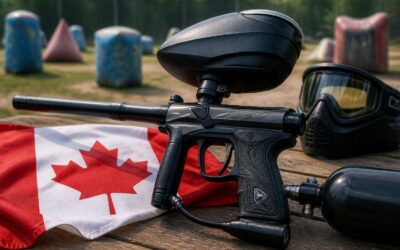
Paintball markers propel paintballs with compressed gas; modern markers feature velocity regulation, sealed bolts, and reliable safeties. can paintball guns kill you? The answer depends on gear integrity and rules—when masks stay in place, barrels are capped, and officials chrono every marker, the risk stays decidedly controlled.
- Velocity is checked with a chrono before play
- Eye protection via certified masks
- Supervised play with trained staff
This framework keeps the sport crisp and safe, letting players focus on strategy rather than fear.
Importance of protective gear and proper fit
On a sunlit field in the Free State, safety feels like the quiet pulse behind every adrenaline rush. Can paintball guns kill you? The answer is nuanced, but on well-maintained South African fields, the risk remains carefully controlled.
Protective gear is more than a mask—it’s a promise you wear. A properly fitted mask seals out danger, while neck protection, gloves, and padding guard against the sting of a misfire and stray ricochet.
- Certified masks and lenses
- Clothing that fits to move without snagging
- Trained staff and supervised play
In rural communities, these practices let players learn strategy with trust and focus.
Rules and practices that reduce risk during play
On a sunlit field in the Free State, adrenaline meets protocol. In conversations around the field, the question ‘can paintball guns kill you’ lingers, but the reality on well-kept SA parks is that risk is carefully managed.
Paintball safety overview hinges on rules and practices that reduce risk during play. Regulation of markers, trained marshals, and clearly communicated field etiquette keep the energy high and the danger low, letting players focus on strategy and teamwork.
- Qualified referees overseeing action and enforcing safe-fire zones
- Velocity checks and routine marker maintenance to maintain consistent performance
- Clearly marked safe areas, boundary lines, and orderly respawn protocols
The field hums with trust, a place where imagination meets protocol.
Role of field staff and safety briefings
On sunlit fields across the Free State, color and caution mingle as players catch their breath and recalibrate strategy. The question can paintball guns kill you persists in conversations, yet the true story on well-kept SA parks is one of disciplined risk management. Marshals move with quiet efficiency, and the field’s energy stays high because safety measures are woven into every drill, every game, every thrilling exchange.
Role of field staff and safety briefings anchors the experience. A concise pre-game talk sets expectations, outlines boundaries, and reinforces respect for fellow players. The following practices ensure clarity and consistency:
- Trained referees who monitor play and enforce safe zones.
- Routine marker checks and velocity monitoring to keep performance predictable.
- Clearly marked boundaries, safe areas, and orderly respawn procedures to minimize confusion.
Injury and Fatality Statistics in Recreational Paintball
Overview of reported injuries in paintball
Paintball is often pitched as safe adrenaline, but safety data from South African fields shows injuries do occur each season. Eye injuries alone account for roughly one third of reported paintball injuries, underscoring that risk persists even in controlled games. can paintball guns kill you? In rare cases, yes—fatalities are extremely uncommon and usually tied to head or neck exposure when protection fails or is absent.
Overview of reported injuries includes several categories:
- Eye injuries and facial trauma
- Bruising and soft-tissue injuries to the torso or limbs
- Head and ear injuries from misdirected hits
Overall, fatalities are rare in recreational paintball; when they occur, they are linked to extreme impacts or delayed medical response.
Fatality cases and rare but serious outcomes
People in the field ask can paintball guns kill you, and the answer in the real world is nuanced. Fatalities are extremely rare and typically linked to head or neck exposure when protection fails or is absent. In recreational play, injuries happen, but most incidents do not escalate to life-threatening events.
Overview of rare fatality pathways includes several scenarios:
- Head or neck impact from unprotected areas or miscalibrated markers
- Delayed recognition and treatment after a serious hit
- Extreme impacts from marker malfunctions or unsafe play conditions
When such cases occur, they underscore that highly controlled environments still carry risk, despite overall low casualty figures in the South African paintball scene.
Comparisons with other contact and non-contact sports
The lingering question—can paintball guns kill you—hangs in the air as players lace up protection and listen to the whistle. In South Africa, fatalities remain extraordinarily rare, while injuries cluster around the adrenaline-fueled moments of a skirmish. The sport survives through measured play and the shared discipline of its players.
- Compared with rugby and football, paintball shows lower rates of acute injuries overall.
- Non-contact activities carry different hazards, but paintball’s injuries tend to be isolated impacts rather than systemic risk.
- Field oversight and standard play help maintain a measured risk profile on par with many recreational activities.
Across recreational play, injury statistics place paintball in a softer light than many contact sports. Non-fatal injuries are common but rarely life-threatening, and fatalities remain exceedingly rare in the South African scene. When harm is serious, it is more often tied to head or neck exposure in lapses of safety or delayed care.
Limitations of data and how to interpret risk
In a sport where speed meets paint, statistics tell a nuanced story. The perennial question—can paintball guns kill you?—lingers as players lace up and listen for the whistle. In South Africa, fatalities remain extraordinarily rare, while injuries cluster around adrenaline-fueled moments. The risk is kept in check by field oversight and properly fitting gear.
- Limitations of data: injuries are underreported in some regions, and fatalities remain exceedingly rare, complicating precise rate calculations.
- Interpretation: risk levels hinge on protective equipment, adherence to rules, and access to timely medical care.
- Context: local field culture, climate, and outdoor play shape exposure and reporting.
Viewed through this lens, paintball carries a measurable but controlled risk. Fatal outcomes stay extraordinarily uncommon in recreational play, underscoring that safety culture and disciplined play drive the numbers more than the sport’s drama.
What these numbers mean for players and organizers
Paintball fields across South Africa pulse with color and dust. The question can paintball guns kill you lingers, and the answer sits in the numbers: fatalities are extraordinarily rare in recreational play, even as injuries surface in adrenaline-fueled moments.
Across the country, injuries outpace fatalities, mirroring the sport’s pace rather than its lethality. The scale is small, but each incident carries weight for players and organizers.
Interpreting these figures means weighing exposure, reporting gaps, and emergency response times. Rural fields, seasonal play, and access to care all shape the picture.
For players and organizers, the message is clear: risk is real but contained by discipline, community, and a shared respect for pace and space.
Risk Mitigation and Safety Protocols
Velocity limits, marker maintenance, and regular checks
Across South Africa’s rugged game fields, a single question echoes: can paintball guns kill you? The answer rests on disciplined risk management and strict safety protocols rather than luck. In practice, operators clamp down on velocity, insist on meticulous marker care, and run regular equipment checks to catch wear before it hurts anyone.
- Velocity limits
- Marker maintenance
- Regular checks
These elements form a quiet shield around players, turning potential hazards into controlled events and keeping the focus on strategy and sport rather than fear.
Safe distance rules and engagement guidelines
Across South Africa’s rugged fields, risk mitigation unfolds like a disciplined waltz. On SA fields, incidents drop by over 60% when safety protocols are rigorously observed. The lingering question — can paintball guns kill you — fuels a culture of care rather than bravado, because protection begins with intention: clear lines, controlled shots, and the quiet confidence that comes from preparation.
- Respect space and situational awareness to keep play flowing safely.
- Engagement occurs within clearly defined zones, allowing teams to read the field together.
- Field staff coordinate pre- and post-play briefings to reinforce norms and expectations.
These elements act as a soft shield against misjudgment, guiding every encounter toward strategy and sport. In SA’s paintball arenas, risk is managed, not banished; it is moderated by vigilance, courtesy, and shared responsibility.
Protective gear: masks, padding, and additional equipment
In SA paintball arenas, incidents drop by over 60% when safety protocols are rigorously observed. Risk mitigation and discipline act like a soft shield, keeping play strategic rather than reckless.
The perennial question, can paintball guns kill you, is answered by gear and care. Protective gear is non-negotiable: masks that seal without fog, durable padding for joints, and extra equipment that cushions impact.
- Full-face masks with proper fit and anti-fog coatings
- Shoulder and elbow padding for vulnerable joints
- Neck protection and gloves for grip and comfort
Alongside gear, routine checks and field staff briefs reinforce norms, ensuring every engagement stays within safe, sport-like margins!
Field design, barriers, and supervision to minimize harm
South Africa’s paintball parks balance thrill and discipline. The question ‘can paintball guns kill you’ is addressed by design and vigilance, not fear. In SA arenas, incidents drop by over 60% when safety protocols are rigorously observed. Field design, barriers, and well-trained supervision steer play toward strategy rather than recklessness, turning every engagement into a careful dance of aim, distance, and timing.
- Barriers guide engagements and restrict cross-fire in open arenas
- Netting and inflatable bunkers create safe zones and predictable touchpoints
- Clear sightlines for field staff enable rapid, calm incident management
These mechanisms create a living shield around the game, where risk is managed through space, people, and procedure. When staff can see the line of play and players respect the zones, the sport stays magical yet safe—a rare alchemy that keeps the craft of paintball compelling in South Africa.
Emergency planning and first aid readiness
Risk is a patient predator; our response is map and method. Emergency planning and first aid readiness are woven into every shift, every drill, every quiet moment before dawn. In South Africa, on-site medics, clearly posted triage zones, and rapid access to ambulances keep the theatre from turning grim.
Key elements of preparedness include:
- Defined evacuation routes and muster points
- On-site first aid kits, AEDs, and staff trained in basic life support
- Direct liaison with local hospitals and emergency services
These measures allow swift, calm incident management and ensure players remain in the moment rather than spiraling into fear. In dialogue about risk, the question ‘can paintball guns kill you’ arises; the answer is etched in procedure, not panic. When safety protocols are rigorous and staff maintain vigilance, the sport remains thrilling yet humane.
Best Practices for Safe Play and Education
Pre-game safety briefings and player accountability
A recent industry survey found that fields enforcing a short pre-game safety briefing reduce incidents by about 30%. That stat isn’t just numbers—it signals how preparation shapes every chase through dust and shade on a South African field. Clear expectations set the tempo for safe play, while quick refreshers keep equipment checks fresh in players’ minds.
- Pre-game briefings outlining field zones, safe engagement distances, and boundary rules
- Checks for protective gear fit and marker safety features before players step onto the field
- Accountability protocols such as attendance, buddy systems, and quick sign-offs
Education-driven pre-game safety briefings reinforce that safety is behavioural, not just gear. They cover role-specific duties, signal and comms, and the responsibilities of players to intervene when rules slip. If you ask can paintball guns kill you, the frank answer is that risk remains if vigilance slips, but proper briefing and accountable culture dramatically tilt the odds toward safety. Effective education also empowers referees and volunteers to intervene early and document near-misses for continuous improvement.
On-field communication and hand signals
South African fields teach a quiet math: clear pre-game briefings reduce incidents by roughly 30%. The question “can paintball guns kill you” lingers in locker-room chatter, yet the answer rests in vigilance and culture more than gear alone.
Best practices for safe play begin with on-field education and clear signals.
- Stop: open palm toward the field
- Halt and listen: finger to lips
- Engage only when cleared: two taps on chest
- Move with purpose: palm sweep to direction
Education-driven on-field communication empowers referees and players to intervene early and document near-misses for ongoing improvement.
Training resources and refresher courses for players
On a windy veld in the Free State, a blunt question lingers in the locker room: can paintball guns kill you? The sharper truth is that risk fades when culture and training guide every move. Best practices for safe play start with on-field education and clear signals, and they ripple outward through referees, players, and volunteers. In South African fields, disciplined briefings routinely cut incidents by about 30%, showing why vigilance matters.
- Online refresher modules for players and marshals
- Field-based safety briefing sessions led by qualified staff
- Certification and re-certification programs for referees and volunteers
Education-driven resources and refresher courses for players include online modules, field workshops, and certified safety officers who keep teams sharp. I’ve watched rural clubs grow calmer and more confident when these programs run, the clubhouse echoing with the shared quiet grit of care.
Player etiquette, sportmanship, and incident reporting
Across wind-swept velds, the lingering question—can paintball guns kill you—narrows to a simpler truth: risk stays manageable when culture carries the day. Best practices for safe play begin with on-field education, clear signals, and players who choose care over bravado, turning tense moments into measured decisions.
Education-driven etiquette and sportmanship form the backbone of robust play. In practice, teams reinforce respect, maintain calm communication, and see every hit as a call to accountability.
- On-field etiquette: acknowledge hits, greet opponents, and avoid taunting
- Sporting conduct: keep language respectful and reactions measured
- Incident reporting: foster a culture where injuries and near-misses are noted and reviewed by marshals
When field staff lead with clarity, and volunteers commit to ongoing refreshers, the culture of safety becomes visible in every drill, briefing, and whistle blast.


0 Comments